

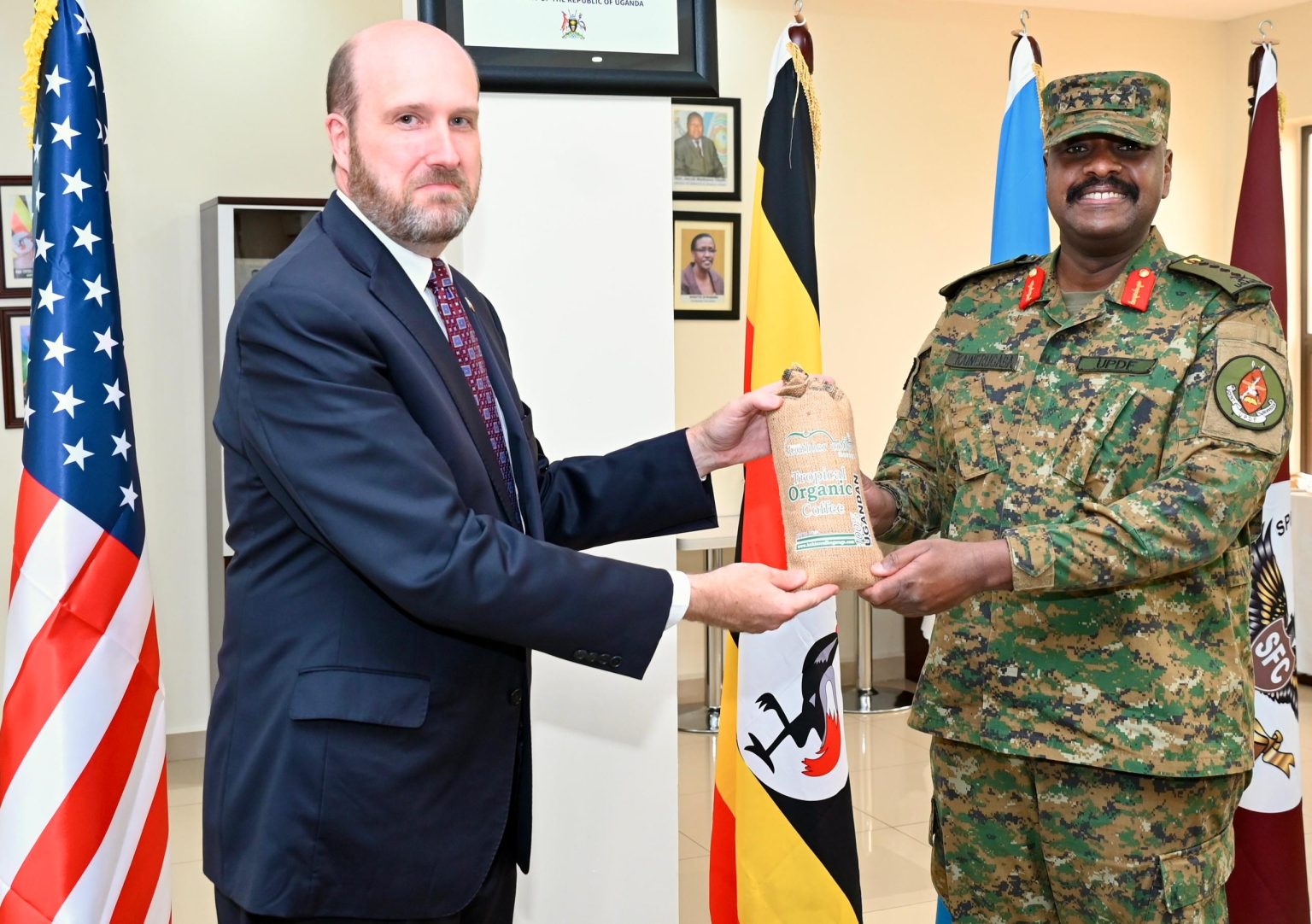
KAMPALA — Uganda’s Chief of Defence Forces, Gen Muhoozi Kainerugaba, sparked diplomatic concern on Friday by accusing the United States Embassy in Kampala of aiding opposition leader Robert Kyagulanyi Ssentamu, popularly known as Bobi Wine, before retracting the allegation and apologising to U.S. officials.
In early morning posts on X (formerly Twitter), Gen Muhoozi alleged that “according to our best intelligence,” Wine’s disappearance following a military operation on January 16 — when troops entered his Magere residence amid the ongoing post-election dispute — was carried out “in coordination with the current administration at the U.S. Embassy in our country.”
He further announced a suspension of all military cooperation between the Uganda People’s Defence Forces (UPDF) and the U.S. mission in Kampala, including joint operations such as Uganda’s contributions to peacekeeping efforts in Somalia. The statement cited long-standing concerns about what he described as “unimaginative bureaucracy” at the embassy undermining security cooperation despite strong political ties between Kampala and Washington.
The claim, made without presenting publicly verifiable evidence, drew swift attention given the sensitive nature of Uganda–U.S. relations, which have traditionally included security assistance and cooperation in regional peace operations.
However, within hours, Gen Muhoozi deleted his initial posts and issued a formal apology. “I want to apologise to our great friends the United States for my earlier tweets that I have now deleted. I was being fed with wrong information,” he wrote on X, adding that he had spoken directly with the U.S. Ambassador to Uganda and that “everything is okay.”
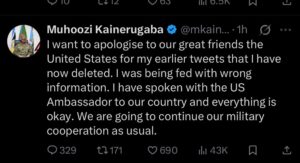
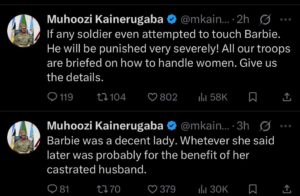
The reversal appeared to calm immediate tensions, with observers noting the importance of sustained engagement between Uganda and the United States — especially given ongoing concerns over political stability and security cooperation. The U.S. Embassy had not issued a detailed public statement by press time.
The allegations and apology come amid heightened political tensions following the January 15 presidential election, which saw President Yoweri Museveni declared the winner with more than 70 % of the vote — a result rejected by Wine and his supporters amid claims of irregularities. Wine has been in hiding, and his supporters say the post-election period has been marked by intimidation and heavy-handed security actions.
Bobi Wine has not publicly responded to Gen Muhoozi’s accusations or the subsequent apology, but the incident underscores the fraught atmosphere in Uganda’s political landscape and the sensitive role of external diplomatic missions in domestic political disputes.
Bobi Wine, who rejects the results of the January 15 presidential election and has alleged intimidation by state security forces in recent weeks, has not directly commented on Gen Muhoozi’s accusation concerning the U.S. mission.
Observers say the dispute underscores rising domestic and international tensions following the contested election, with implications for Uganda’s diplomatic engagements and internal political stability.
ALSO READ: Muhoozi Deletes Threatening Posts Against Bobi Wine After International Backlash
