

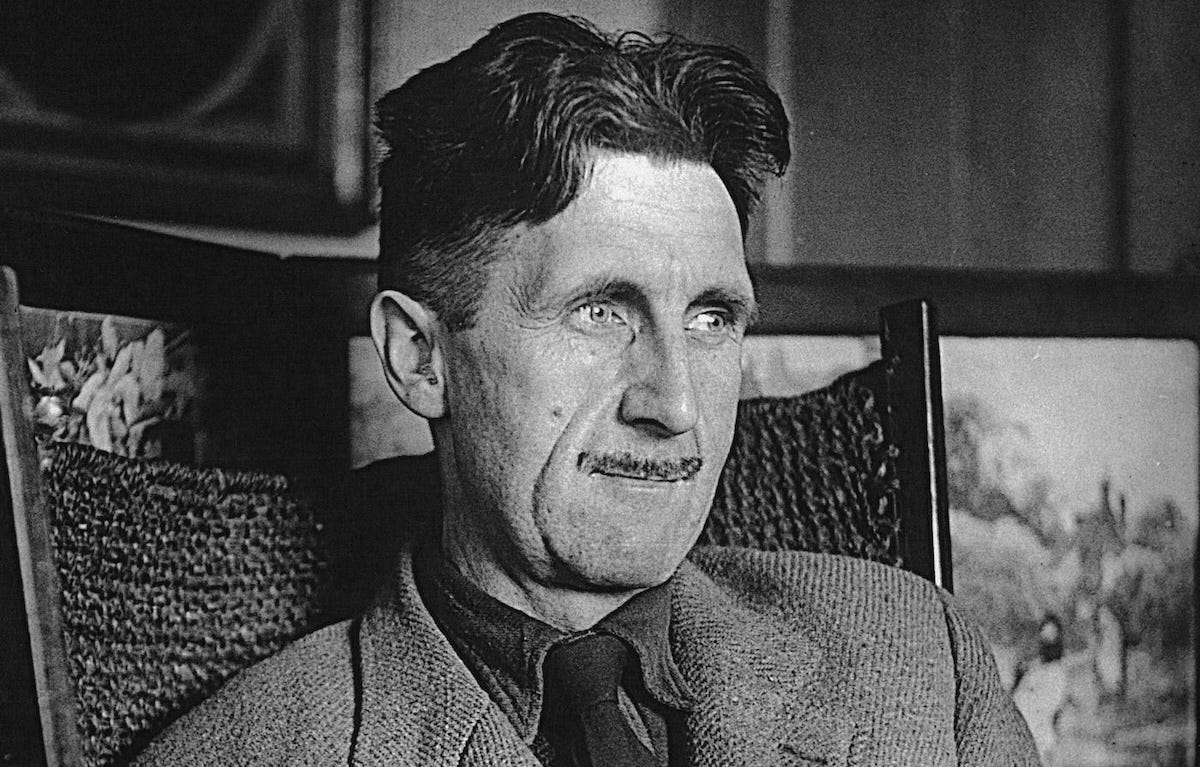
More than seven decades after his death, George Orwell remains one of the most influential writers of the modern age, his ideas echoing powerfully in political debates, media discussions and everyday conversations across the globe.
Born Eric Arthur Blair in 1903 in British-ruled India, Orwell carved a legacy that transcended literature, producing works that doubled as political warnings. His most famous novels, Animal Farm (1945) and Nineteen Eighty-Four (1949), are not just classroom staples but enduring commentaries on power, propaganda and the abuse of authority.
Orwell’s worldview was shaped early by his experiences with imperialism and inequality. After serving as a colonial police officer in Burma (now Myanmar), he became deeply disillusioned with empire and oppression a turning point that pushed him toward writing.
He later immersed himself in the lives of the poor, documented in works such as Down and Out in Paris and London, and fought alongside leftist forces during the Spanish Civil War, where he witnessed political betrayal and ideological manipulation first-hand. These experiences hardened his opposition to totalitarianism in all its forms — whether from the right or the left.
Published in the aftermath of World War II, Animal Farm uses a simple farmyard allegory to expose how revolutions can be hijacked by elites. Though widely read as a critique of the Soviet Union under Joseph Stalin, the novel’s message proved universal: power corrupts, and slogans often replace truth.
The phrase “All animals are equal, but some animals are more equal than others” has since entered political language worldwide, frequently quoted in discussions about broken promises and elite hypocrisy.
Orwell’s final novel, Nineteen Eighty-Four, painted a grim picture of a society under constant surveillance, where language is manipulated, history rewritten and dissent crushed. Concepts such as Big Brother, doublethink, and thoughtcrime have become part of everyday vocabulary.
In an era of mass data collection, artificial intelligence, misinformation and state surveillance, Orwell’s warnings feel less like fiction and more like prophecy. His fear was not technology itself, but how those in power might use it to control truth and thought.
Despite being frequently cited by politicians and commentators across the ideological spectrum, Orwell himself rejected rigid political labels. He described himself as a democratic socialist, committed to equality and freedom, and deeply suspicious of anyone who claimed absolute moral authority.
Scholars note that Orwell’s work is often selectively quoted, but his core message remains consistent: freedom depends on truth, and truth depends on the courage to speak plainly.
George Orwell died in 1950 at the age of 46, but his influence has only grown. His essays on politics, language and journalism continue to guide writers and thinkers, while his novels are re-examined whenever societies grapple with censorship, authoritarianism or propaganda.
In a world increasingly shaped by information wars and competing narratives, Orwell’s voice still cuts through the noise — reminding humanity that the greatest threat to freedom is not force alone, but the quiet erosion of truth.
ALSO READ: Zion Pursuers Prayer Mountain ranks among the best prayer mountain sites in Uganda
