

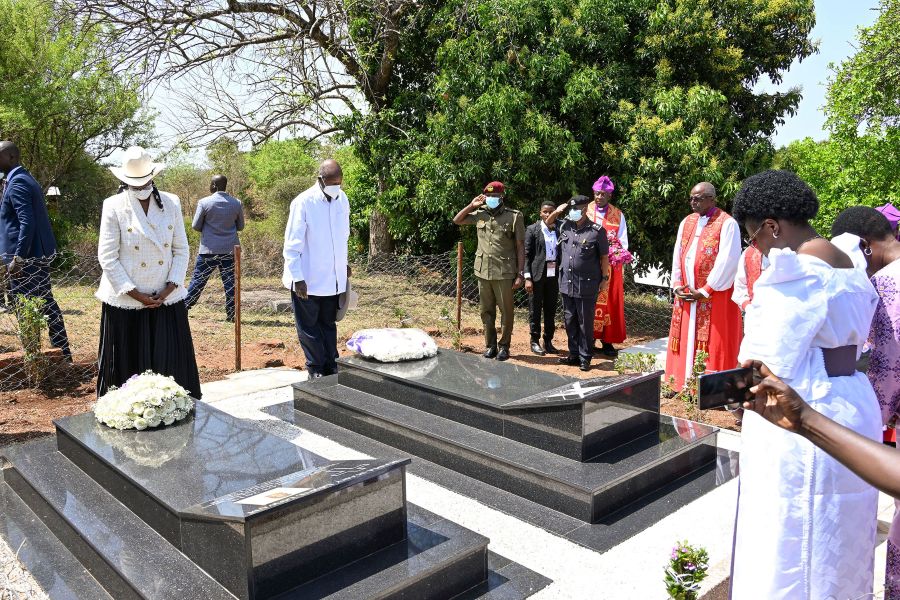
President Yoweri Kaguta Museveni yesterday used the commemoration of St Janani Luwum Day, observed annually on 16 February, to call on Ugandan leaders to pursue leadership through service and persuasion rather than coercion.
Addressing thousands of worshippers, political figures and religious leaders at the burial site of the late Archbishop Janani Luwum in Mucwini, Kitgum District, Mr Museveni paid tribute to the Anglican prelate’s courage and ultimate sacrifice during the brutal regime of former dictator Idi Amin.
The President, who was accompanied by First Lady and Minister of Education and Sports Janet Museveni, emphasised that leadership must be anchored in winning hearts through delivery of services and tangible benefits, rather than through intimidation or force.
“Leaders should not impose themselves on the people,” Mr Museveni said, drawing a historical parallel with Uganda’s past and warning against practices that echo former abuses. “Both scripture and political history show that persuading people is better than imposing yourself on them,” he added.
In his address, the President also highlighted government efforts to expand infrastructure and services in northern Uganda, a region that historically did not strongly support the ruling National Resistance Movement at the ballot box. He thanked voters for what he described as an “overwhelming block vote” in the recent general elections, and credited sustained development investments including roads, electricity, health centres and schools for improving voter confidence.
Mr Museveni pledged government support for the upgrading of the late archbishop’s burial site into an international memorial and tourism destination, promising that once a master plan is completed, work will begin to turn the site into a centre of pilgrimage and cultural heritage.
St Janani Luwum Day marks the 49th anniversary of the martyrdom of Archbishop Janani Luwum, who was killed on February 16, 1977, after confronting human rights abuses during Amin’s rule. The day is observed across the country with prayers, hymns and reflections on peace, service and national unity.
Religious leaders at the event, including Church of Uganda officials, called for continued political tolerance and unity ahead of future electoral cycles. Some also appealed for accelerated investment in preserving the legacy of Luwum, whose stand against oppression remains a powerful symbol for many Ugandans.
