

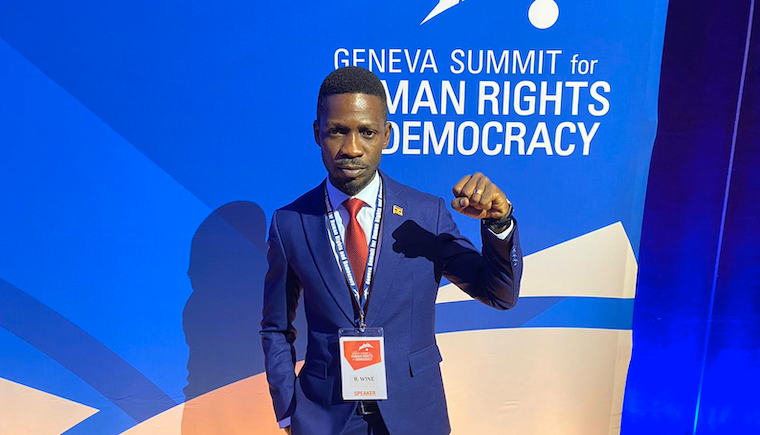
Thousands of human rights activists, dissidents and global policymakers are converging today (18 February 2026) in Geneva for the annual Geneva Summit for Human Rights and Democracy, a high-profile gathering held each year ahead of the main United Nations Human Rights Council session.
Ugandan opposition leader Bobi Wine, whose legal name is Robert Kyagulanyi Ssentamu, is scheduled to address the summit by video from Geneva, bringing international attention to Uganda’s political crisis following the disputed January general election and his ongoing standoff with state security forces.
The Geneva Summit traditionally amplifies voices from repressive contexts and spotlights human rights abuses around the world. It is organised by a coalition of civil society groups and features testimonies from activists, dissidents, former political prisoners and victims of state repression.
This year’s agenda includes sessions on freedom of expression, political persecution and transnational repression, with speakers from Zimbabwe, Hong Kong, North Korea, Syria and Belarus. The summit is timed to coincide with the annual session of the UN Human Rights Council, placing pressure on member states to respond to urgent rights concerns.
For Ugandans at home and in the diaspora, the summit provides a rare platform to internationalise concerns about political freedoms, election credibility and the treatment of opposition figures.
Bobi Wine’s participation comes against the backdrop of Uganda’s January 15 presidential election, which official results show was won by long-serving President Yoweri Museveni, while Bobi Wine the main opposition candidate trailed with roughly a quarter of the vote. Wine has rejected the results as fraudulent and highlighted what he describes as systemic repression by state security forces.
EU Parliament Resolution Boosts Bobi Wine’s International Advocacy.
Locally, the period since the vote has been marked by clashes, internet blackouts and heavy security deployments, with United Nations human rights monitors warning of “widespread repression and intimidation” against opposition actors and civil society.
At the summit, Bobi Wine is expected to frame his remarks around these themes electoral integrity, human rights abuses, and the role of international actors. Analysts say this mirrors his broader strategy of mobilising global opinion as part of his political campaign and as leverage against state pressures that have left him at times in hiding and under alleged threat.
Expected Outcomes and Reactions
The summit’s global platform could prompt renewed scrutiny by Western governments and international bodies over alleged rights violations, media suppression and electoral irregularities in Uganda. Delegates may call for urgent action from the UN Human Rights Council and other multilateral institutions.
Bobi Wine’s address might influence how diplomatic missions engage with Kampala. While some nations have previously been cautious in critiquing Uganda due to security and counter-terrorism partnerships, pressure from human rights forums could shift rhetoric or policy positions in the coming weeks.
For many Ugandans, particularly opposition supporters, the summit represents an important venue to amplify grievances that domestic media and civic space have struggled to carry. For government loyalists, however, such international engagements are often dismissed as interference in sovereign affairs.
As events unfold in Geneva, the eyes of many Ugandans at home and abroad will be on how global attention might affect the next phases of the country’s political and human rights trajectory.
ALSO READ: Bobi Wine Set to Address 2026 Geneva Summit, Strengthening International Profile
