

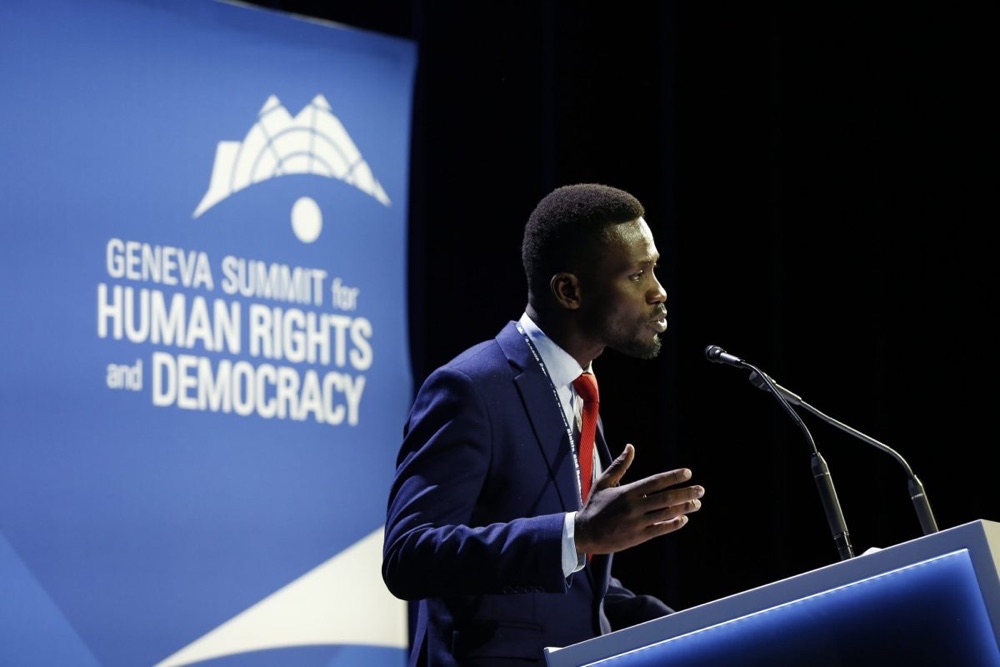
Opposition leader Robert Kyagulanyi Ssentamu, popularly known as Bobi Wine, is set to address the 18th Geneva Summit for Human Rights and Democracy on February 18, 2026, in Switzerland. The summit, which brings together human rights defenders, activists, and victims from across the globe, offers him a high-profile platform to highlight Uganda’s post-election environment and the alleged abuses that followed the January 15 polls.
This will not be Wine’s first engagement with the summit. In April 2022, he addressed the forum under the theme “How to Topple a Dictator,” detailing his experiences with torture, intimidation, illegal detentions, and violent crackdowns by state security forces. The summit, which convenes annually to draw attention to human rights violations worldwide, allowed him to frame his struggle not merely as domestic politics, but as part of a global fight for democracy. That platform amplified his narrative, attracting international attention to Uganda and increasing diplomatic pressure on the Museveni administration.
The 2026 edition comes at a particularly strategic moment for Wine. Analysts note that the summit provides him with a rare opportunity to shape the global narrative, presenting first-hand accounts of alleged abuses, drawing the attention of diplomats, international organizations, and civil society, and reinforcing his image as a human rights defender. Unlike legal proceedings, the summit cannot compel courts such as the International Criminal Court (ICC) to act, but it can strengthen political advocacy by placing Uganda under international scrutiny and encouraging multilateral support for independent investigations into alleged crimes against humanity.
Wine has consistently leveraged international platforms to pursue both visibility and influence. His 2021 documentary, “Bobi Wine: The People’s President,” highlighted alleged atrocities committed by state authorities, while his previous speeches in Brussels and Geneva have framed his struggle as one for civil liberties, justice, and democratic governance. The 2026 summit allows him to continue this strategy, using the event to mobilize support among Uganda’s diaspora, global activists, and policymakers who monitor human rights and governance issues.
Observers suggest that participating in Geneva enhances Wine’s political standing not only internationally but also domestically. By portraying himself as a legitimate defender of democratic principles and human rights, he counters the government’s portrayal of him as merely a disruptive opposition figure, while signaling to supporters and critics alike that his political ambitions extend beyond national borders. The summit reinforces his messaging that systemic abuses in Uganda are not merely a domestic matter, but a concern for the global community.
ALSO READ: EU Parliament Resolution Boosts Bobi Wine’s International Advocacy.
