

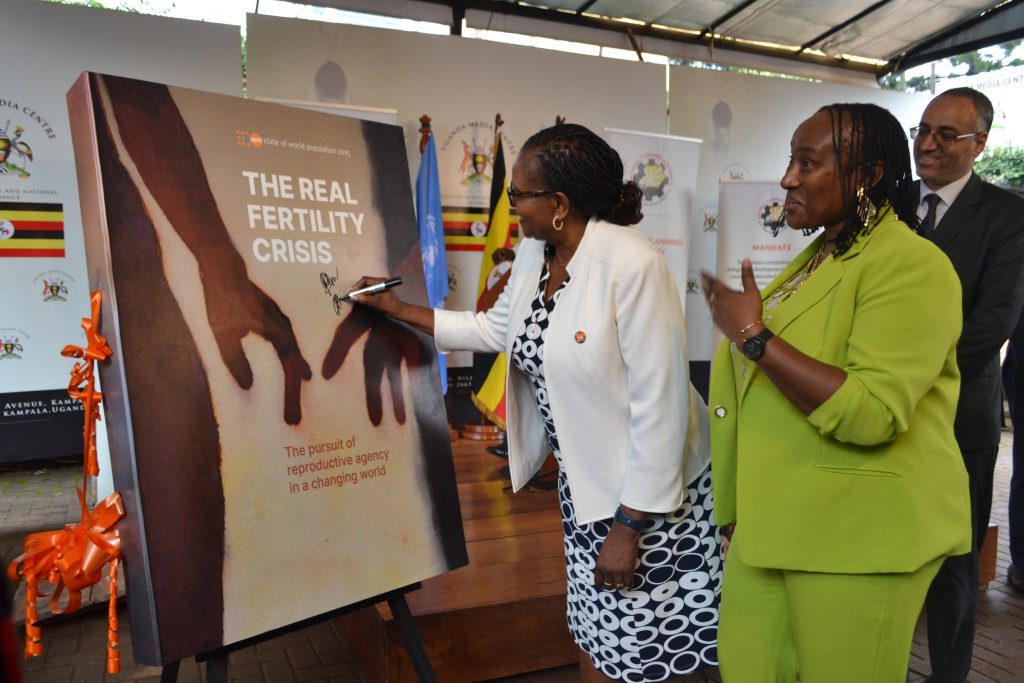
Fertility Decline in Uganda
Uganda’s long-standing reputation as one of Africa’s fastest-growing nations is beginning to change, official data show. According to the latest State of Uganda Population Report 2025 issued by the National Planning Authority (NPA), the country’s Total Fertility Rate (TFR) has fallen from 7.1 children per woman in 1991 to an estimated 4.5 in 2024 a significant demographic shift over the past three decades.
The downward trend reflects broader socioeconomic changes: increased access to family planning services, expanded reproductive health awareness, higher educational attainment, and more employment opportunities especially for women. Government statisticians have linked these factors to evolving preferences for smaller families, particularly in urban areas where the costs of raising children are higher.
Despite the decline, Uganda’s population is still growing rapidly with health officials estimating about 1.5 million births annually. This continued expansion means pressure on public services such as health, education, water and sanitation remains acute. Minister of State for Finance (Planning), Amos Lugoloobi, has warned that high fertility contributes to a “youth bulge” that outpaces job creation, exacerbating unemployment and mental health stress among young people searching for work.
The government has welcomed the fertility decline but cautioned against complacency. Demographers note that a sustained reduction is critical for converting Uganda’s youthful population into a demographic dividend where a large working-age population supports higher economic growth. This requires investments in education, reproductive health access, child care services, and economic opportunities to ensure families can make informed choices about size without being constrained by poverty or service gaps.
Yet key challenges remain. Teenage pregnancies continue at persistently high levels, stagnating near 24 – 25 percent, driven by socio-economic disadvantages, early marriages, cultural norms, and limited access to quality family planning in rural areas. Health advocates warn that without targeted interventions, the cycle of high dependency and strain on services will persist, undermining long-term development goals.
For policymakers, the demographic shift underscores a pivotal moment: Uganda’s population trajectory is changing, but harnessing it for economic transformation will depend on sustained and inclusive policies that address education, jobs, health systems and gender inequality. Failure to do so risks entrenching poverty even as birth rates fall.
ALSO READ: Deadly Snakebite Claims 26 years Ifunanya Nwangene, Sparks Health Care Questions.
