

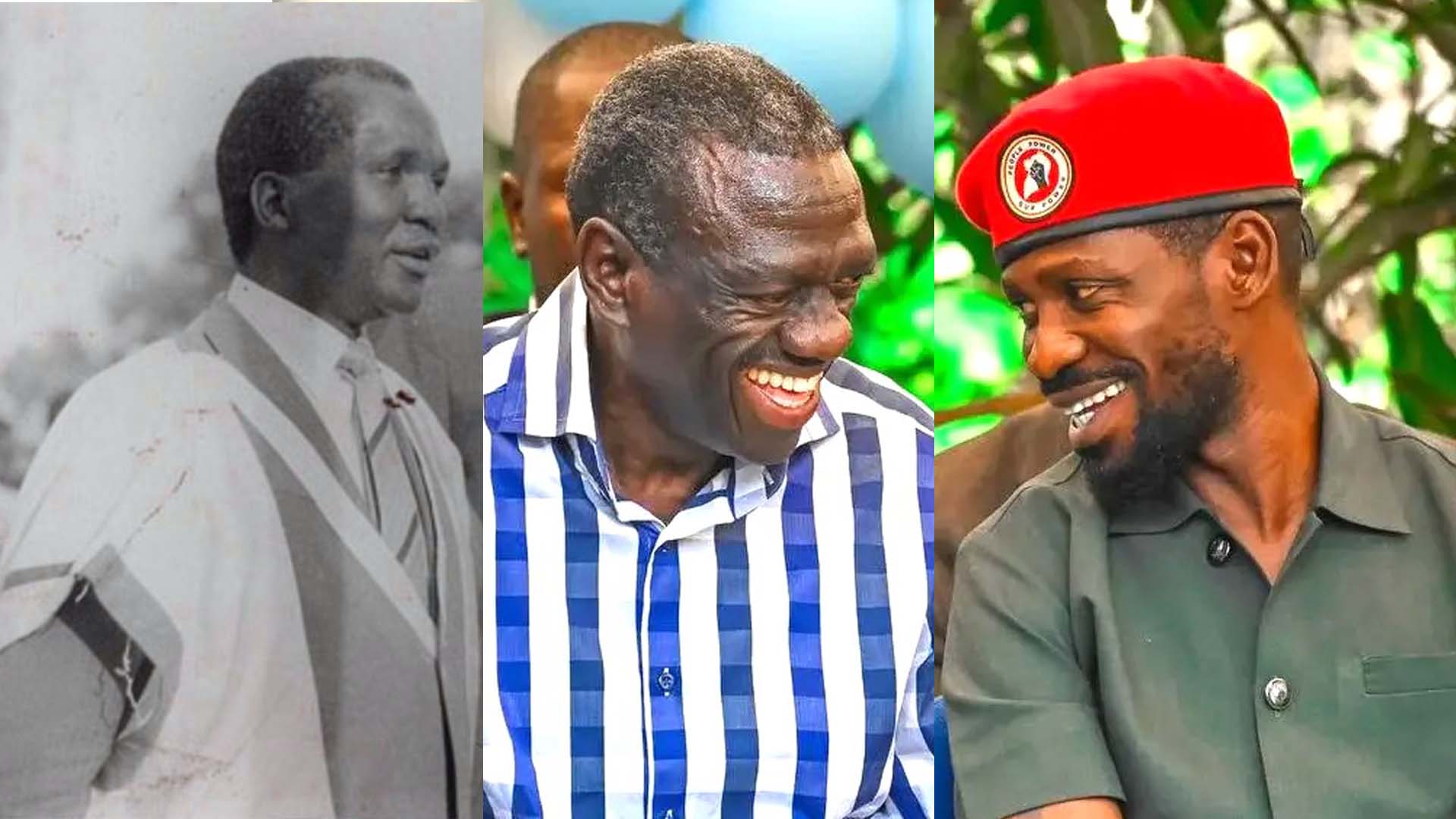
Uganda’s political landscape has long been defined by the struggle between entrenched government power and persistent opposition. From Paul Kawanga Ssemwogerere in the 1980s, to Kizza Besigye in the 1990s and 2000s, to Robert Kyagulanyi (Bobi Wine) in the 2010s and beyond, each generation of opposition has employed unique strategies to challenge President Yoweri Museveni’s decades-long rule. Meanwhile, Museveni has consistently employed a combination of army tactics, laws, financial leverage, fear, and political arrests to maintain his grip on power.
Kawanga: Institutional Politics in the Early Era
Paul Kawanga Ssemwogerere represented Uganda’s early multiparty opposition, seeking change through formal institutions. He relied on parliamentary engagement, party structures, and appeals to constitutionalism.
While Kawanga garnered support in urban areas, Museveni’s government used legal restrictions and strategic appointments to limit his influence.
The early NRM government also leveraged loyalty networks and financial incentives to secure support among local leaders, effectively weakening Kawanga’s party reach in rural areas.
Analysts note that Kawanga’s era faced a system resistant to challenge, where legal loopholes, administrative controls, and patronage were already being used to suppress opposition influence.
Besigye: Confrontation and Mass Mobilization
Kizza Besigye brought direct confrontation to the opposition scene, turning his presidential campaigns and civil disobedience efforts into a national phenomenon.
Campaigns such as the Walk-to-Work protests mobilized thousands and highlighted public discontent over rising costs of living.
Museveni’s government responded with army deployment, tear gas, and mass arrests, signaling that challenges to the status quo would not be tolerated.
Beyond physical repression, the state employed laws and regulations to limit political activity, including arrests under charges of “inciting violence” or “illegal gatherings.”
Fear became a political tool: ordinary citizens hesitated to participate in demonstrations, knowing the consequences could include detention, fines, or job loss.
Despite these barriers, Besigye’s activism raised political consciousness, especially in urban centers. He exposed the mechanisms of state control, from security forces to courts, while simultaneously cultivating a base of loyal supporters committed to political change.
Bobi Wine: Youth, Music, and Digital Mobilization
Robert Kyagulanyi, popularly known as Bobi Wine, brought a cultural and digital dimension to opposition politics. His People Power movement attracted thousands of urban youth who felt disconnected from traditional party politics.
Using music, social media, and public rallies, Bobi Wine bypassed traditional political structures, creating a decentralized, highly mobilized movement.
Museveni’s government countered with internet shutdowns, blocking rallies, arrests of supporters, and the strategic deployment of the army in urban areas to disperse crowds.
Financial incentives and patronage were again used to weaken loyalty to the movement, offering jobs, contracts, or land to potential supporters in exchange for political compliance.
Fear remained central: participants risked arrest, harassment, or even physical violence, yet many young Ugandans continued to engage, signaling a generational shift in political courage.
Each generation of opposition faced a government learning from past challenges, making it harder to sustain momentum while also sharpening public awareness of state repression.
Uganda’s opposition has never toppled Museveni, but the strategies have grown bolder and more creative over time. Kawanga laid the institutional foundation, Besigye normalized protest, and Bobi Wine expanded activism into youth culture and digital spaces. Meanwhile, Museveni’s tactics — army, laws, money, fear, and arrests — have evolved to meet each challenge.
ALSO READ: Besigye Must Walk Free — By Court Order or Political Deal?
