

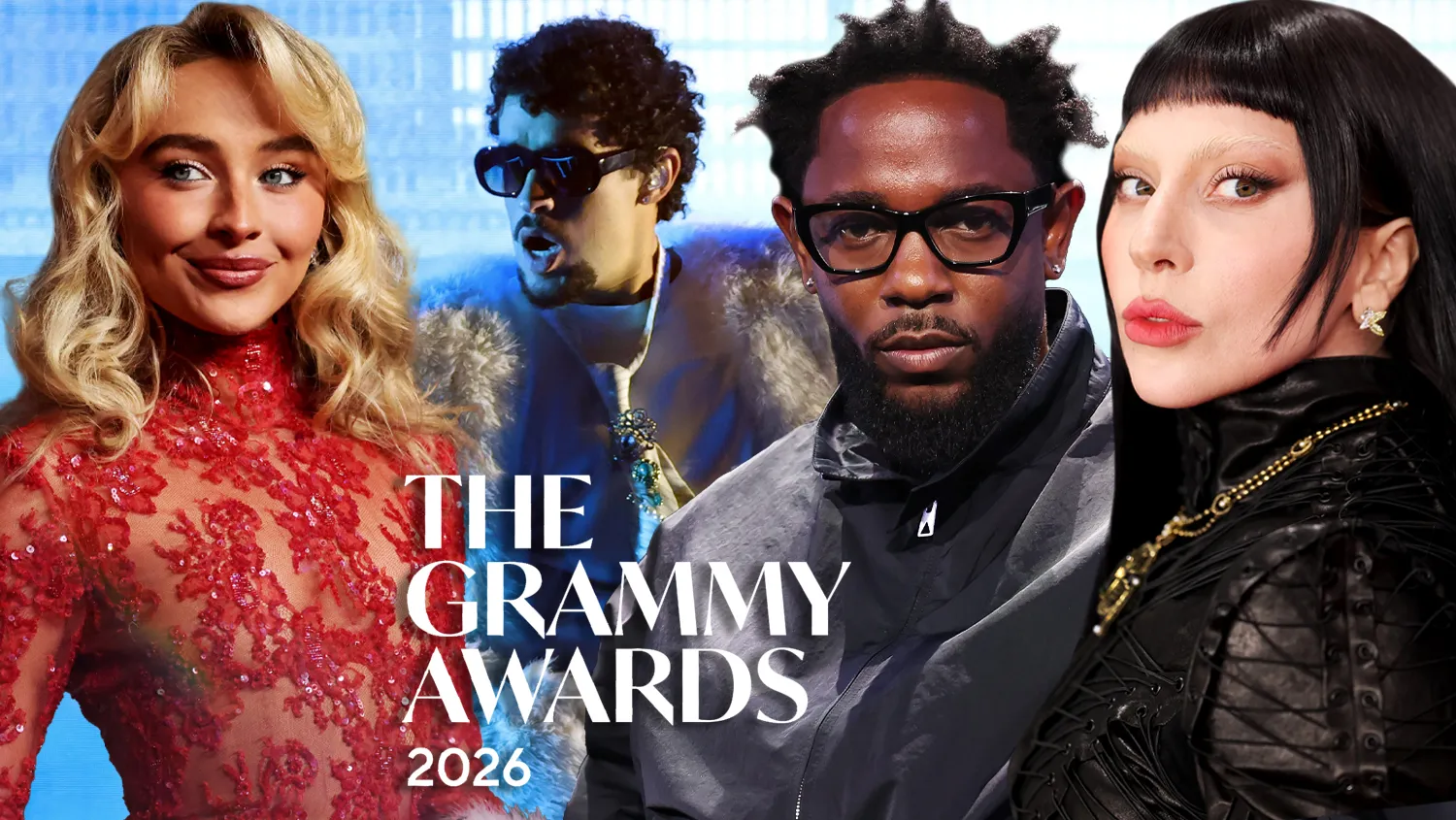
As the 68th Grammy Awards take place today in Los Angeles, new industry data and voting trends point to a deeper reason behind the unusually stiff competition: the music industry is more fragmented, global and data-driven than at any point in Grammy history.
Unlike past decades where a handful of blockbuster albums dominated both charts and awards, the 2026 Grammys reflect a year in which no single sound, genre or market clearly controlled the conversation.
According to music analytics firms tracking 2025 releases, the top 20 albums globally were split almost evenly across hip-hop, pop, Latin, alternative and R&B, a sharp contrast to earlier eras dominated by pop alone.
This fragmentation explains why artists such as Kendrick Lamar, Lady Gaga, Bad Bunny, Billie Eilish and Sabrina Carpenter enter tonight’s ceremony with comparable momentum but none with an overwhelming advantage.
Streaming platforms also show that listener loyalty is increasingly song-based rather than album-based, weakening traditional Grammy predictors and making outcomes harder to forecast.
Another major shift lies within the Recording Academy itself. Membership reforms over the last five years have brought in thousands of younger voters, independent producers and non-US creators.
Internal industry surveys suggest that nearly one-third of active voters now work outside traditional major-label structures, favoring artistic innovation over commercial dominance. This change has tilted the awards toward creative risk-taking and cross-genre experimentation intensifying competition in top categories.
For the first time, non-English projects are not seen as novelty contenders. Latin music consumption grew significantly in North America and Europe in 2025, while African and Caribbean sounds influenced mainstream pop production.
This shift strengthens the position of artists like Bad Bunny, whose Spanish-language work is now competing on equal footing with English-language albums a development that would have been unthinkable a decade ago.
Another layer of competition comes from the tension between viral popularity and long-term artistry. Several nominees enjoyed massive social media traction, but Grammy voters historically lean toward longevity and innovation.
This divide has created tight races where chart leaders face stiff resistance from critically acclaimed projects with smaller but more devoted audiences.
Music economists argue that the Grammys have entered an era where plurality, not dominance, defines success. With streaming, global collaboration and AI-assisted production lowering barriers to entry, excellence is no longer concentrated at the top.
As a result, tonight’s ceremony is expected to deliver split wins, surprise outcomes and historic firsts — reinforcing the idea that the Grammys are evolving from a popularity contest into a broader measure of cultural impact.
When the final trophies are handed out, they will not just reward the year’s best music, but reflect an industry undergoing profound transformation.
ALSO READ: Dindo of Kasawo: The Rocky Landmark Steeped in Myth and Tradition
