

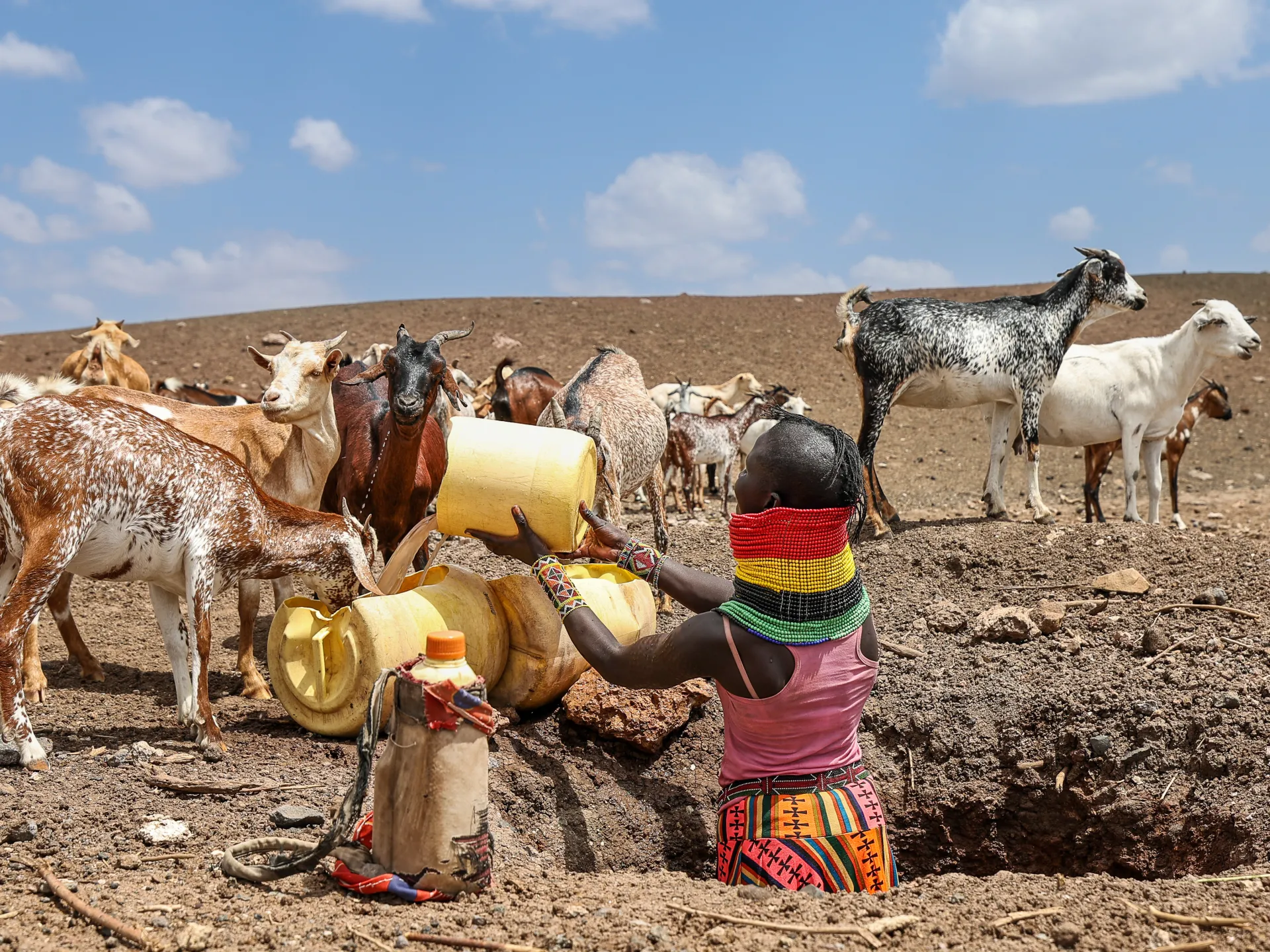
Scarce rains and mounting food insecurity are driving northern Kenya toward a deepening humanitarian crisis after years of erratic weather. Once-fertile grazing lands have turned to dust as drought conditions intensify in counties like Turkana, Mandera and Marsabit.
Local families have resorted to eating wild fruits now increasingly scarce while livestock carcasses line parched plains, testimony to the broader collapse of pastoral economies.
Seventy-six-year-old Echakan Amaja, widowed after her son was killed in a cattle raid, survives with just meagre rations and foraged food, underscoring the human toll of diminishing livelihoods and conflict over scarce resources.
Kenya’s National Drought Management Authority reports that more than nine counties are now under emerging drought conditions, elevating risks of water shortages, crop failures, and competition for limited pastureland.
Aid agencies warn that funding cuts by major donors, including reductions in World Food Programme support, are forcing a scale-back of humanitarian assistance at a time when needs are growing.
The reduction in specialized food supplies for severely malnourished children could have devastating consequences, especially in remote areas where access to medical services is limited.
National and county governments have launched relief interventions, including food distribution and cash transfers, but the scale of support remains insufficient to meet the soaring demand.
Climate experts note that drought conditions in East Africa reflect a pattern of increasingly erratic rainfall and climate change impacts, with successive failed wet seasons worsening food and water insecurity across borders.
ALSO READ: Somalia Faces Worst Hunger Crisis in Years Amid Drought Emergency.
