

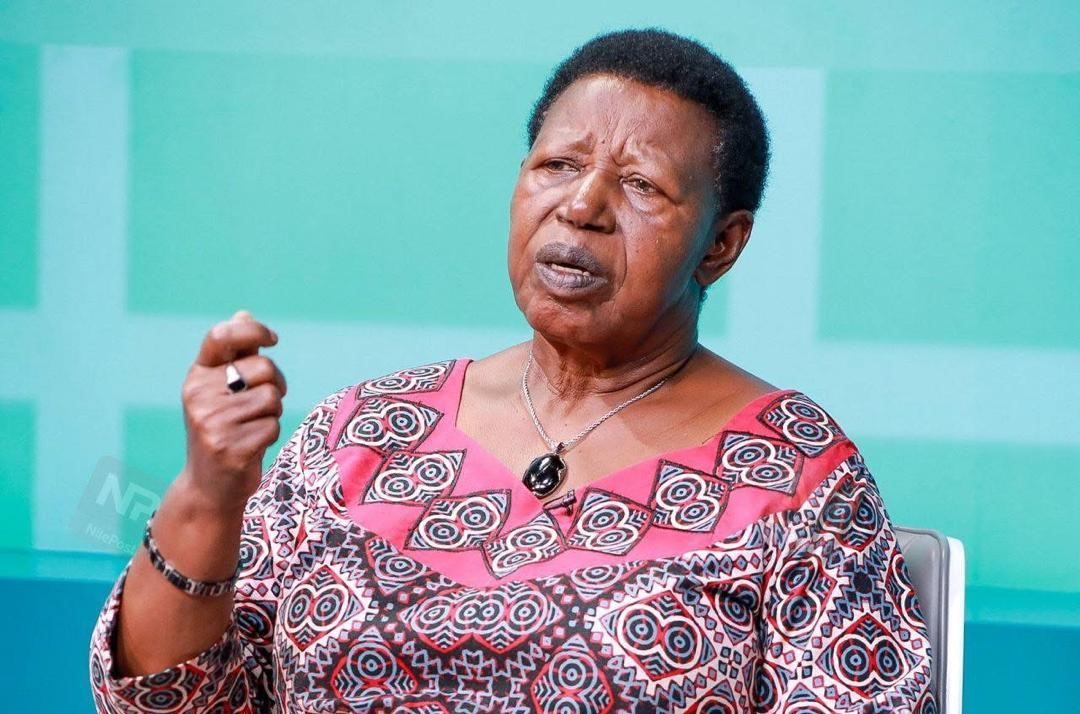
In a moment that sent shockwaves through the NBS Frontline studio, veteran politician Miria Matembe once a minister under President Yoweri Museveni and now one of his most outspoken critics delivered a scathing indictment of Uganda’s mainstream media.
With a steady gaze and unmistakable resolve, Matembe accused journalists of obsessing over political theatrics while the nation faces far graver realities.
The evening’s discussion on NBS Television revolved around Yusuf Nsibambi, a former member of the Forum for Democratic Change (FDC), crossing over to the ruling National Resistance Movement (NRM). Matembe bluntly dismissed the storyline as “silly,” arguing that such coverage pales in comparison to the crises confronting Ugandans, including reports of killings, abductions, unlawful arrests, and political repression.
Turning to host Simon Kaggwa Njala, she challenged the media’s editorial priorities, insisting that coverage of defections and party maneuvering diverts public attention from issues of far greater consequence.
“While headlines spotlight defections and party politics, ordinary citizens are facing reports of violence, detention without trial, and suppression of dissent,” Matembe told the panel. Her intervention transformed a predictable discussion into a pointed reckoning about the media’s role in shaping national consciousness.
Her critique echoed arguments advanced by media scholars Noam Chomsky and Edward S. Herman in Manufacturing Consent: that news institutions, whether intentionally or structurally, can steer public focus toward less consequential narratives, away from uncomfortable truths.
Observers note that Matembe’s comments resonate with growing frustration over the post-election environment, where opposition leaders such as Bobi Wine have gone into hiding amid alleged intimidation, and reports of political imprisonment continue to surface.
By prioritizing media accountability over political spectacle, Matembe sparked a broader debate on responsibility and ethics in journalism. Critics of the mainstream press say her intervention is a reminder that focusing on defections or party intrigue can obscure the most urgent issues facing Ugandans, including human rights violations and the erosion of democratic space.
Matembe’s appearance on Frontline comes at a time when Uganda’s media environment is under scrutiny for its role in reporting post-election political tensions, highlighting the intersection of politics, media influence, and civic awareness.
In calling out what she sees as media distractions, Matembe has positioned herself not merely as a political commentator but as a voice advocating for public accountability and informed national discourse. Her remarks are likely to reverberate across newsrooms and political circles in the coming weeks.
ALSO READ: Deadly Snakebite Claims 26 years Ifunanya Nwangene, Sparks Health Care Questions.
