
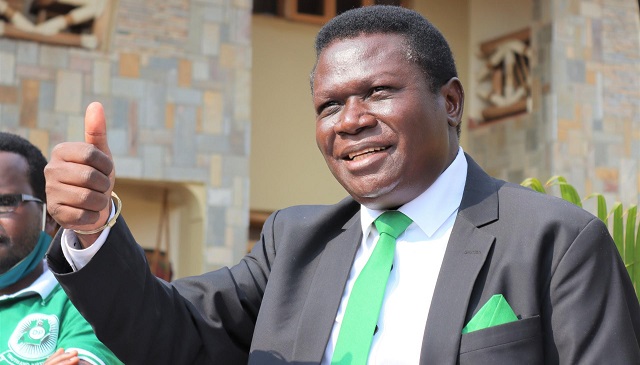
In the shifting terrain of Uganda’s politics, one name has increasingly surfaced in conversations about the future leadership of Parliament: Norbert Mao. As a seasoned politician, a legal professional, and a long-time advocate for peace and institutional reform, many Ugandans and analysts alike are beginning to ask is Mao a compelling candidate to become the next Speaker of Parliament?
While Mao has publicly denied that he has declared an ambition for the Speakership, acknowledging the rumours as just that rumours he has also openly reflected on why some believe he is fit for the role, and why he could be considered a strong contender if he chose to pursue it in the future.
Who Is Norbert Mao? The Qualifications and Experience
Norbert Mao is a lawyer, politician, and the current Minister of Justice and Constitutional Affairs of Uganda a position he has held since 2022. He began his political career in Parliament in the 1990s as an MP for Gulu Municipality and later served as the Local Council 5 chairperson for Gulu District. His leadership extends beyond national politics: Mao is the chairman of the East African chapter of the Parliamentary Network on the World Bank and helped found the Great Lakes Parliamentary Forum on Peace, an initiative focused on regional stability.
He also brings a strong educational background, including a law degree from Makerere University, a Diploma in Legal Practice, and a fellowship at Yale University, where he further sharpened his global leadership outlook.
These credentials mean Mao meets the formal qualifications to be Speaker which are primarily that the Speaker must be a Member of Parliament. Beyond that, Mao frequently highlights experience, education, leadership skills, and both local and international networks as qualities a Speaker should have and qualities he believes he possesses.
His Political Journey and Roots
Mao’s political identity is shaped as much by his personal journey as by his roles. Growing up in Bwobo, a rural village in northern Uganda, he rose through academia and national politics. His life story resonates with many in northern Uganda, a region that has endured decades of conflict and post-war reconstruction.
This background gives Mao a deep understanding of Uganda’s social challenges particularly in areas like trauma healing, transitional justice, and regional development which he has championed publicly.
The Legacy of Jacob Oulanyah and Regional Representation
The late Jacob Oulanyah represented a watershed moment in parliamentary leadership. Oulanyah, who was born in Gulu and rose to be Speaker of Parliament until his death in 2022, brought prominence to voices from northern Uganda in the highest echelons of legislative leadership.
Given Mao’s own roots in the Acholi sub-region and his long-standing friendship with Oulanyah, many observers see continuity in elevating leadership from that region. Mao himself has acknowledged that the public often draws parallels between his leadership and Oulanyah’s legacy, though he underscores that he is not trying to replicate it.
Such regional representation matters in Uganda’s political balance, especially as leaders seek to integrate diverse voices across historic divides.
Political Reality and Parliamentary Arithmetic
Despite his credentials, any bid for the Speakership must contend with the political realities of Uganda’s Parliament. The National Resistance Movement (NRM) holds a large majority of parliamentary seats, and its support is crucial for someone aspiring to be Speaker. Mao has stated that he is engaged in consultations, including with NRM leadership, and underscores that any leadership decision must serve national, not partisan interests.
Interestingly, some speculate that the cooperation agreement between Mao’s Democratic Party (DP) and the ruling NRM could position him as a compromise candidate if political circumstances evolve.
International Context and Relations
From an international perspective, the role of Speaker is not just domestic it matters in diplomacy, governance perception, and regional cooperation. Mao’s experience with international parliamentary networks and peace forums means he understands global governance norms and East African political dynamics.
In an era where Uganda is navigating complex international relations from economic partnerships to regional security engagements a Speaker with international exposure and legal expertise could help strengthen legislative diplomacy and institutional credibility.
Speaker Anita Among and Deputy Thomas Tayebwa Meet Museveni Amid Leadership Talks
So, Could Mao Be the Next Speaker?
At present, Mao has neither declared a formal bid nor confirmed plans to run for Speaker. But the underlying public sentiment and political conversations suggest there is belief in his suitability, should he decide to pursue the position. His robust experience domestically and internationally, his legal grounding, his advocacy for peace and justice, and his personal and political roots all point toward why many see him as capable of occupying one of Uganda’s most influential offices.
ALSO READ:
