

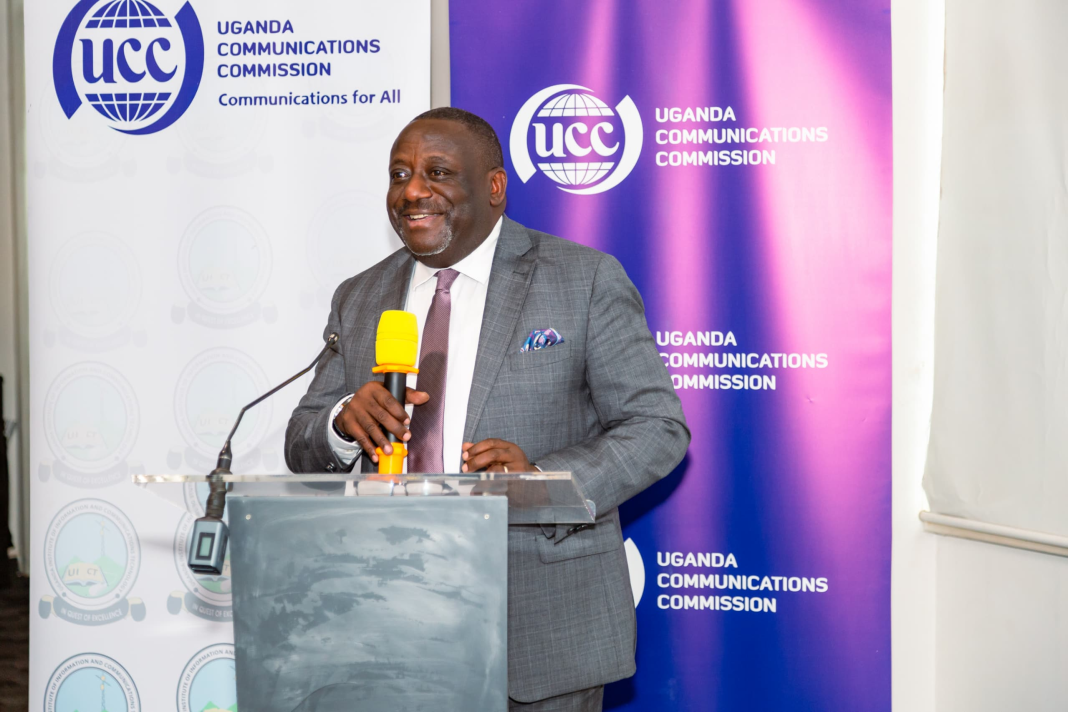
The Uganda Communications Commission (UCC) has moved to enforce broadcasting standards by clarifying its stance on so‑called “squeeze backs” and other split‑screen advertising techniques during news and current affairs programmes.
In a decision delivered on January 27, 2026, the communications regulator ruled that any form of split‑screen advertising, including what some broadcasters refer to as “squeeze backs,” is prohibited during news and current affairs shows because it mixes commercial messages with editorial content in violation of national broadcasting rules.
“Squeeze backs” describe a format where adverts briefly appear alongside ongoing programme content — effectively dividing the screen to accommodate both simultaneously. The Commission said that even if the intent is to briefly show branded material beside news, it still counts as split‑screen advertising and contravenes the Advertising Standards 2019 and the Minimum Broadcasting Standards under the Uganda Communications Act.
Nipah Virus Outbreak: Some Cases Confirmed, How Can You Stay Safe?
The ruling followed a complaint from AdLegal International Limited against NBS Television, which had used split‑screen adverts during shows such as Morning Breeze, NBS Frontline and NBS Eagle. Broadcasters had argued their approach was merely “squeeze backs,” but the regulator rejected that distinction.
UCC has issued a directive ordering immediate cessation of all split‑screen advertising during news and current affairs programmes. The directive applies not only to the station named in the complaint but to all broadcasters in Uganda, with the Commission warning that failure to comply may attract sanctions.
While the Commission did not impose financial penalties on NBS for the breach — noting the broadcaster acted under a mistaken interpretation of the rules — it made clear that editorial content should remain free from commercial overlays to protect journalistic integrity and avoid misleading viewers.
Parties dissatisfied with the decision have 30 days to appeal under existing regulatory law.
ALSO READ: Dindo of Kasawo: The Rocky Landmark Steeped in Myth and Tradition
