

By the time the morning mist lifts off the tangled hills of southwestern Uganda, Bwindi Impenetrable National Park reveals why it continues to outshine all other tourist attractions in the country. Ancient, offspring and alive with sound, Bwindi is not just a forest is a living archive of nature and culture, and probably Uganda’s most compelling tourism asset.
Located in Kanungu, Kisoro and Rubanda districts, Bwindi is one of the oldest ecosystems in Africa, estimated to be more than 25,000 years old. Its dense vegetation—so thick it once repelled colonial-era explorers—now shelters what draws visitors from across the globe: nearly half of the world’s remaining mountain gorillas.
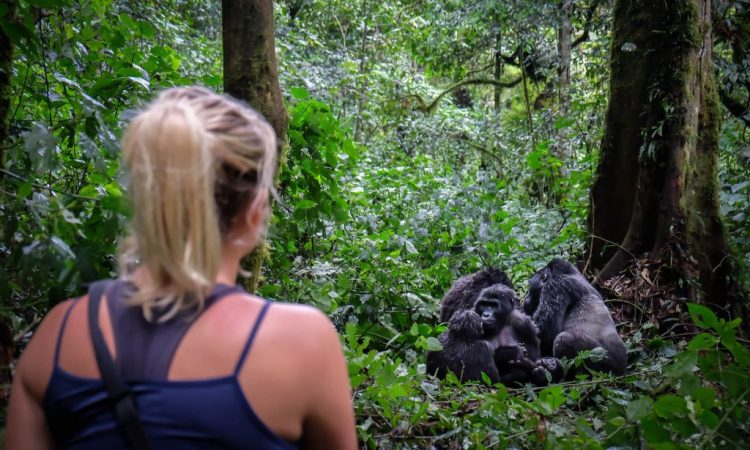
Gorilla trekking is the park’s headline act, and for good reason. Each year, thousands of tourist’s brave steep slopes and muddy trails for a chance to spend a single hour with a habituated gorilla family. The encounter is quiet, humbling and deeply emotional. For many visitors, it is a once-in-a-lifetime experience that places Bwindi firmly on the world tourism map.
According to the Uganda Wildlife Authority (UWA), Bwindi consistently generates the highest tourism revenue among Uganda’s national parks, largely driven by gorilla permits. But to reduce the forest to gorillas alone would be to miss its broader significance.
Bwindi is a biodiversity hotspot of global importance. The park is home to over 120 mammal species, including forest elephants, chimpanzees and several antelope species. It boasts more than 350 bird species—making it a paradise for birdwatchers—as well as hundreds of butterflies, medicinal plants found nowhere else on earth.
Beyond wildlife, Bwindi is a model of conservation intertwined with community livelihoods. Surrounding the park are local communities whose lives are deeply linked to the forest. Through regulated tourism, revenue-sharing programmes and community-owned lodges, Bwindi has become a case study in how conservation can coexist with human development.
In an era where tourism increasingly values authenticity and sustainability, Bwindi fits the moment. It offers raw nature without spectacle, adventure without artifice. The forest demands effort, patience and respect, rewarding visitors not with entertainment, but with perspective.
As Uganda continues to market itself as the “Pearl of Africa,” Bwindi Impenetrable National Park stands as the clearest expression of that promise. It is a place where conservation delivers economic value, where tourism supports survival, and where the world comes face to face with one of its closest relatives in the animal kingdom.
More than a destination, Bwindi is a reminder that Uganda’s greatest wealth lies not in what has been built, but in what has been preserved
