

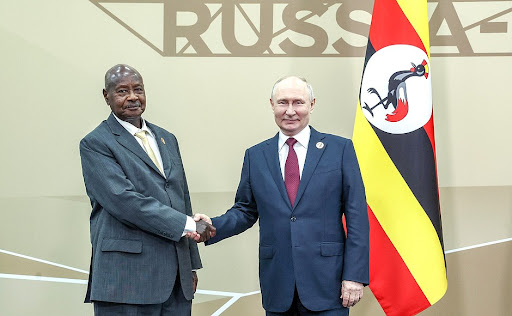
KAMPALA, UGANDA — As President Yoweri Kaguta Museveni extends his rule following the disputed 2026 general election, several world leaders and regional organizations have publicly congratulated him on his victory — even as many Western governments and international bodies remain cautious or notably silent on the outcome.
President Museveni was declared the winner of the January 15 poll with 71.65 percent of the vote, extending his leadership into a seventh term. His main challenger, Robert Kyagulanyi Ssentamu (Bobi Wine) of the National Unity Platform, rejected the results as “fake” and decried alleged irregularities in the process.
Leaders Who Have Sent Congratulations
Several African and global leaders have issued formal messages to President Museveni:
Russian President Vladimir Putin
In a message delivered via the Russian Embassy in Kampala, Putin praised the long‑standing relationship between Moscow and Kampala and expressed optimism for expanded cooperation.
“Dear Mr. Museveni! Please accept my sincere congratulations on the occasion of your re‑election as President of the Republic of Uganda,” Putin wrote, adding his wishes for success, good health and well‑being. Burundian President Évariste Ndayishimiye
Ndayishimiye extended his congratulations on X (formerly Twitter), noting:
“May your visionary leadership continue to steer the nation forward. Looking forward to continuing to work together to strengthen the longstanding bilateral ties between our countries.”
Kenyan President William Ruto, 🇷🇼 Rwandan President Paul Kagame, 🇸🇴 Somali President Hassan Sheikh Mohamud, 🇹🇿 Tanzanian President Samia Suluhu Hassan and 🇪🇬 Egyptian President Abdel Fattah al‑Sisi have also issued messages of goodwill, with many emphasizing regional cooperation and stability. For example, Kagame said he “look[s] forward to the continued strong and productive cooperation between our two countries.”
African Union Commission (AUC)
The AUC’s Chairperson, Mahamoud Ali Youssouf, commended the electoral process and reaffirmed the AU’s commitment to supporting democratic governance, while congratulating Museveni on his seventh term.
International Conference on the Great Lakes Region (ICGLR)
The ICGLR Secretariat also extended its congratulations, describing the outcome as a demonstration of the democratic choice of the Ugandan people.
Why Many International Actors Are Silent or Cautious?
Despite these messages, many Western governments and major international institutions have not issued formal congratulations — a silence that analysts say reflects concerns over the credibility of the election and reports of irregularities:
Concerns about electoral fairness
The European Union (EU) stated it “takes note” of the official results but highlighted concerns about an uneven playing field, arbitrary arrests and a government‑ordered internet shutdown during the vote‑counting period. The EU urged all parties to exercise restraint and called on authorities to protect all political actors.
Human rights and post‑election violence
Independent observers and human rights groups have raised alarms over pre‑ and post‑election violence, and restrictions on civil liberties. These concerns make some governments reluctant to endorse the results without further, credible verification.
Strategic diplomacy and restraint
Some countries may be opting for a measured diplomatic approach, emphasizing dialogue and stability, or waiting for conclusive reports from international observer missions before issuing public statements.
Balancing Stability and Scrutiny
Support from regional neighbors and partners like Russia, Burundi and the African Union underscores longstanding political and economic relationships — especially in areas like trade, defense cooperation and regional peace efforts. Meanwhile, the caution from Western capitals reflects broader geopolitical calculations and normative concerns about democratic processes and human rights standards.
As Uganda enters this new term under President Museveni, the mix of endorsements and restraint from abroad highlights a complex international response — one that balances existing strategic partnerships against concerns about electoral integrity and the future of democratic governance in the East African nation.
ALSO READ: Minister Balaam Alleges NUP Election Rigging in 2026 Polls

2 Comments
Pingback: Speaker Anita Among and Deputy Thomas Tayebwa Meet Museveni Amid Leadership Talks - Mukono News
Pingback: US Senator Risch Calls Museveni Polls a ‘Hollow Exercise,’ Flags Muhoozi for Possible Sanctions - Mukono News