

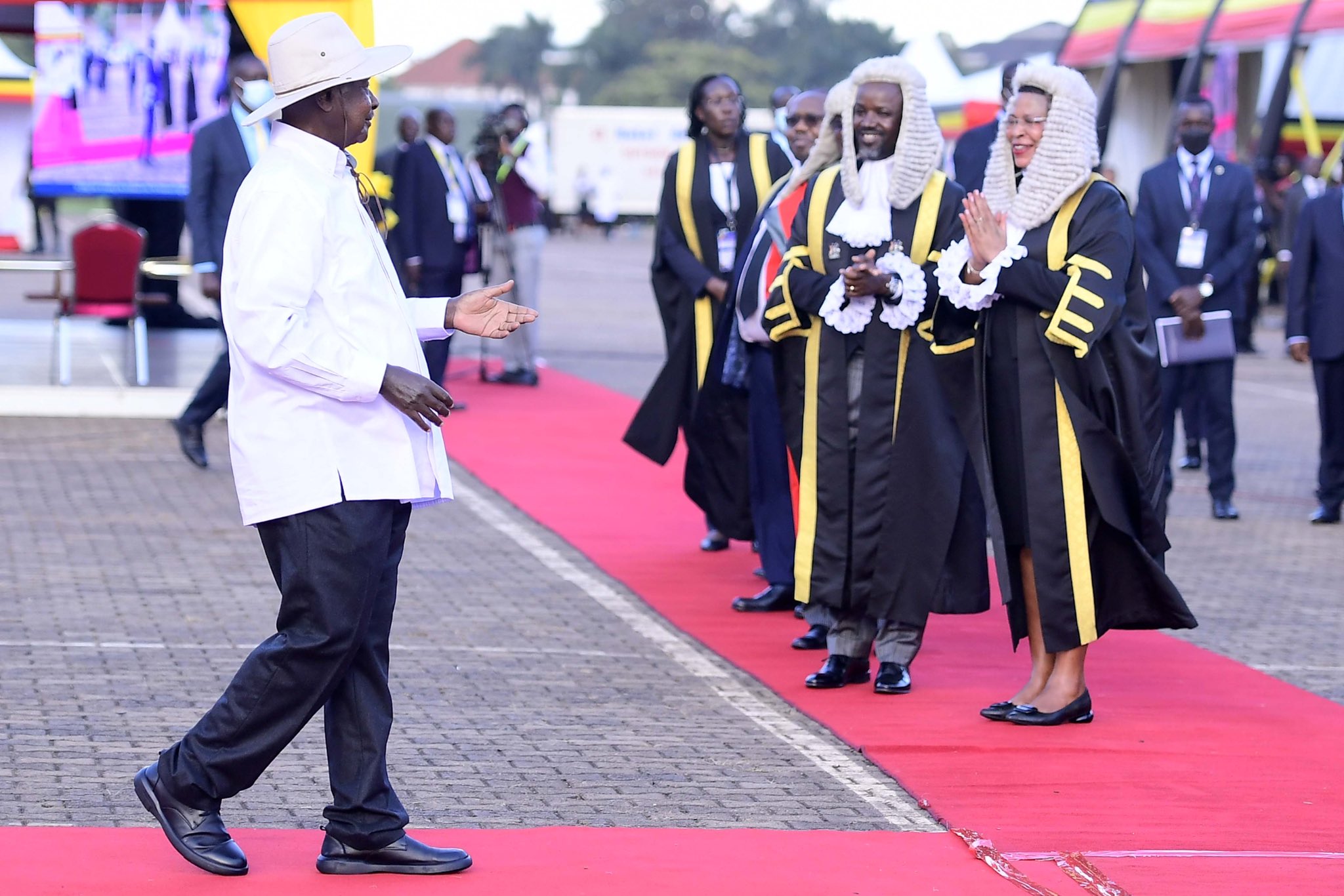
Speaker of Parliament Anita Among and her deputy Thomas Tayebwa’s recent meeting with President Museveni at his farm has reignited debate about the future of the House, the ruling National Resistance Movement’s internal calculations, and whether Ms Among will retain the speakership in the new parliamentary tenure.
The meeting, though officially described as consultative, is widely being interpreted within political circles as part of the early manoeuvring that often characterises transitions between parliamentary terms under the NRM’s long stay in power. For Ms Among, who recently secured her return to Parliament, the encounter comes at a moment when her political standing remains strong domestically but complicated on the international front.
Ms Among’s victory back to Parliament reaffirmed her grip on grassroots politics and strengthened her claim to continue steering the House. Since assuming the speakership, she has consolidated influence within the ruling party caucus and positioned herself as a loyal defender of the government’s legislative agenda. Her supporters argue that continuity would serve both Parliament and the party, especially as the NRM prepares to manage internal cohesion ahead of the next electoral cycle.
However, her tenure has not been without controversy. International sanctions imposed on her over alleged corruption have cast a long shadow, raising questions about how Uganda’s Parliament will engage with external partners in the coming term. While the government has dismissed the sanctions as unfair and politically motivated, analysts note that they have complicated parliamentary diplomacy and placed the institution under greater international scrutiny.
Deputy Speaker Thomas Tayebwa, who also met the President, remains a key figure in the equation. Seen as a steady hand within the House and a bridge between different factions of the ruling party, Mr Tayebwa’s role in the new NRM tenure is expected to be pivotal regardless of who occupies the Speaker’s chair. His continued prominence signals the party’s preference for stability and internal balancing rather than abrupt leadership change.
Also hovering in the background is Norbert Mao, the Democratic Party president and current Minister of Justice and Constitutional Affairs, whose cooperation agreement with the NRM has altered traditional opposition dynamics. Mr Mao’s position places him at the intersection of reformist rhetoric and establishment politics, and his influence could shape legislative priorities, particularly on governance and legal reforms, in the new term of Parliament.
The bigger question, observers say, is the fate of Uganda’s Parliament itself. With an assertive executive, a dominant ruling party, and a fragmented opposition, the House faces renewed scrutiny over its independence, oversight role and relevance to ordinary citizens. Critics argue that Parliament risks further erosion of public trust if it is perceived as merely endorsing executive decisions, while defenders insist that engagement rather than confrontation delivers tangible results.
As consultations continue behind closed doors, the coming weeks are expected to clarify whether Ms Among retains the speakership or whether the NRM opts for recalibration. Whatever the outcome, the choices made will shape not only the leadership of the House but also the tone, credibility and effectiveness of Uganda’s Parliament in the new term.
ALSO READ: List of African & international Leaders Who Congratulated Museveni After 2026 Election Victory.
