

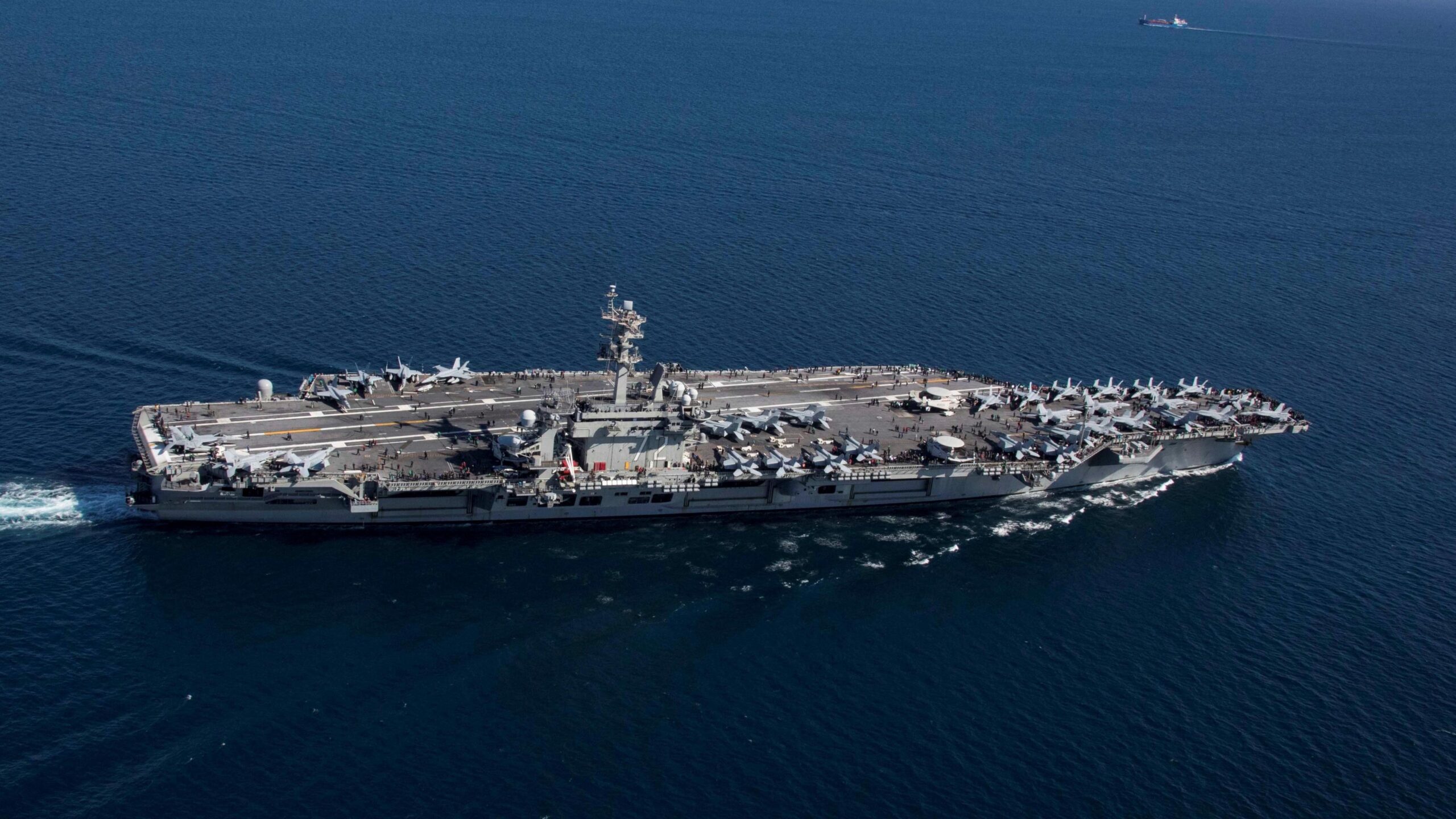
The nuclear‑powered aircraft carrier USS Abraham Lincoln and its accompanying strike group have arrived in the Middle East, thrusting U.S.–Iran tensions into what many analysts describe as the most dangerous phase since the region’s last major confrontation in 2025. The deployment comes amid nationwide protests in Iran, fiery statements from U.S. President Donald Trump, and warnings of a possible military strike that could reverberate across the globe.
The USS Abraham Lincoln, accompanied by three guided‑missile destroyers, has steamed into waters governed by U.S. Central Command, bringing thousands of U.S. service members and significant firepower. U.S. military officials say the deployment aims to bolster “regional security and stability,” but the positioning of the strike group near the Arabian Sea and Gulf of Oman places it within striking distance of Iranian territory should a conflict erupt.
President Trump has intensified his rhetoric in recent days, describing the naval force as a “massive armada” heading toward Iran, and urging Tehran to “come to the table” to negotiate a nuclear deal or face a U.S. attack that would be “far worse” than previous strikes. Trump’s comments, made on social media and in interviews, revived alarms of imminent military action after months of escalating tensions.
While the White House maintains that diplomacy is still possible, Trump’s language underscores that military options remain on the table. U.S. defence officials have also announced multi‑day aerial and naval drills in the region as part of a show of force accompanying the carrier’s arrival.
Iranian leaders have reacted strongly to the U.S. build-up. Tehran’s foreign ministry has warned that the Islamic Republic is “prepared to immediately and powerfully respond to any aggression” against its territory, airspace, or waters, echoing a longstanding deterrence stance. Iranian military commanders have stressed that any U.S. attack would be met with fierce retaliation.
The delicate situation has also drawn reactions from Iran’s Revolutionary Guard and other hardline figures, who assert that the country will defend itself “like never before” if pushed into a conflict.
The backdrop to these tense international showdowns is a wave of protests across Iran that began in late 2025 over economic hardship and political grievances. The demonstrations have been met with a harsh crackdown, leading to thousands of deaths and widespread detentions, drawing international condemnation. The U.S. government publicly backed the protesters and sharply criticized Tehran’s response, further straining bilateral relations.
ALSO READ: Trump Threatens 100% Tariff on Canada Over China Trade Deal
Beyond Tehran’s official response, Iran‑aligned militias in Yemen and Iraq have threatened renewed attacks on shipping lanes and regional targets as the U.S. naval presence grows. Yemen’s Houthi rebels recently suggested new assaults on Red Sea vessels in a show of solidarity with Iran, heightening concerns about conflict spill‑over beyond the Gulf.
World capitals are watching closely. Some regional U.S. partners have urged restraint, warning that a military strike could ignite a broader war. Others, while aligned with Washington on curbing Tehran’s nuclear ambitions, fear the fallout from an open conflict. As tensions mount, diplomatic channels between Washington and Tehran, though strained, remain partially open.
Analysts say the presence of the USS Abraham Lincoln, Trump’s stark warnings, and Iran’s stern responses have created a volatile mix. Whether the confrontation will escalate into conflict or lead to a negotiated de‑escalation remains uncertain, but the world watches as both nations appear poised at a critical juncture.
US Senator Risch Calls Museveni Polls a ‘Hollow Exercise,’ Flags Muhoozi for Possible Sanctions
