

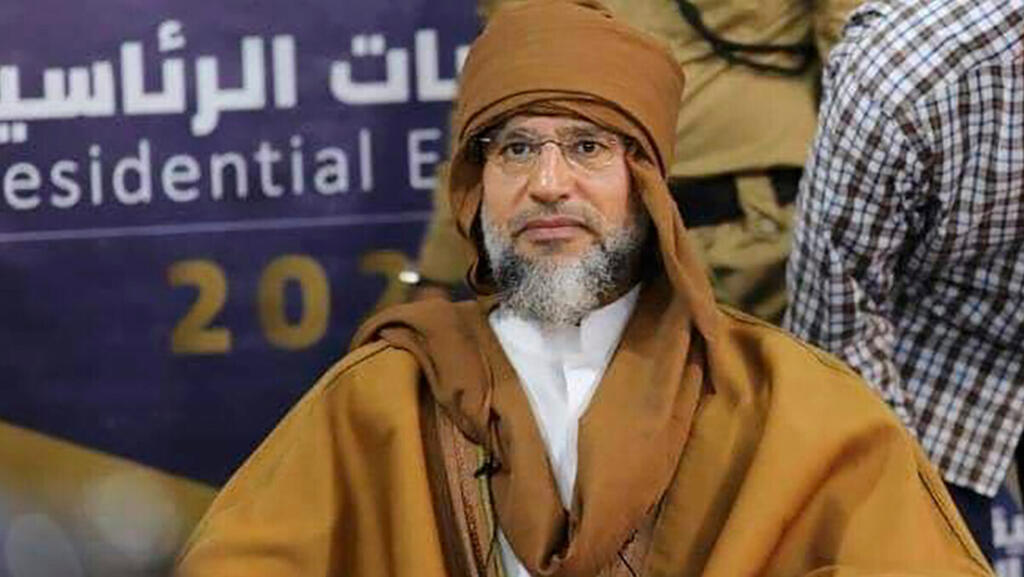
Tripoli, Libya — Saif al-Islam Gaddafi, the internationally known son of the late Libyan dictator Muammar Gaddafi, was killed in an assassination early on Tuesday, 3 February 2026, in the western Libyan town of Zintan. He was 53.
According to Libyan officials, his lawyer Khaled el-Zaydi and political adviser Abdullah Otham confirmed that four unidentified gunmen entered Gaddafi’s residence in the pre-dawn hours after disabling security cameras and shot him dead. Forensic reports verified that his cause of death was multiple gunshot wounds.
Though details remain limited and some accounts conflict, the leading narrative from family sources and local media indicates the attack was a targeted assassination, abrupt and precise, leaving no room for natural causes or accidental death.
Born in 1972, Saif al-Islam was long considered the political face of the Gaddafi regime’s attempted reform and international outreach in the early 2000s. Western diplomats once saw him as a possible successor to his father due to his education — including a doctorate from the London School of Economics — and roles in negotiating Libya’s disarmament on nuclear and chemical fronts.
But when the Arab Spring uprising engulfed Libya in 2011, his path diverged sharply. As anti-government protests flared into armed rebellion, Saif al-Islam aligned with loyalist forces, earning an international arrest warrant from the International Criminal Court (ICC) for alleged crimes against humanity related to the violent suppression of protests.
Captured by a militia near Zintan later that year, he was held for six years. In 2015, a Tripoli court sentenced him to death in absentia, a ruling widely criticised by human rights observers. He was released in 2017 under contentious circumstances and spent several years largely out of the public eye.
In a sign of Libya’s fragmented political landscape, Saif al-Islam resurfaced in the public sphere with tentative plans to run for president in 2021. That bid was disrupted by internal legal battles over his conviction and by deep political divisions that ultimately stalled Libya’s electoral process.
Despite no formal political office in recent years, he remained a prominent figure — viewed by supporters as a potential unifying force and by opponents as a lingering symbol of Gaddafi-era authoritarianism and impunity.
There has been no official claim of responsibility for Tuesday’s assassination. The identities and motives of the attackers remain unclear. Some local reports suggest possible involvement of armed militias aligned with rival factions, but no group has publicly taken credit.
Political leaders across Libya called for calm and an immediate, transparent investigation. Khaled al-Mishri, former head of the Tripoli-based High State Council, urged authorities to make findings public and pursue justice for a killing that threatens to deepen divisions rather than heal them.
International reactions were cautious; diplomats stressed the need for restraint as Libya — already plagued by competing governments and militia networks — grapples with the consequences of a high-profile political killing.
Saif al-Islam’s death closes a controversial chapter in Libya’s post-Gaddafi transition. He was one of the most powerful and polarising figures of his generation — once envisioned as reformer, later reviled as war criminal, and until now a key, if contentious, player in the country’s fragile peace process.
As Libya continues to struggle with fragmentation, the assassination highlights the perilous interplay of politics, vengeance, and militancy that defines its current era — and begs the question of whether a peaceful path forward remains within reach.
Zion Pursuers Prayer Mountain ranks among the best prayer mountain sites in Uganda
