

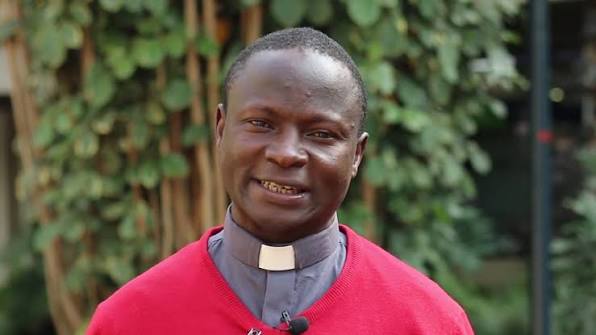
The High Court in Masaka has granted bail to Rev Fr Deusdedit Ssekabira, ending weeks of detention that sparked controversy within the Catholic Church, human rights circles and the political arena.
Fr Ssekabira, a priest attached to Bumangi Catholic Parish in Masaka Diocese, is facing charges related to money laundering, which the State alleges involved the concealment of large sums of money suspected to be proceeds of crime.
In her ruling, the High Court judge held that the accused had satisfied the conditions for bail, noting that investigations were still ongoing and that the prosecution had not demonstrated that Fr Ssekabira would interfere with witnesses or investigations if released.
The court released him on cash bail and ordered him to produce substantial sureties, while also directing him to report periodically to court until his case is fixed for hearing.
Fr Ssekabira was earlier denied bail by the Magistrate’s Court on grounds that the offence he faces is only triable by the High Court. His defence team subsequently petitioned the High Court, citing prolonged detention and violations of his constitutional rights.
According to the charge sheet, Fr Ssekabira is accused of concealing or disguising the origin and ownership of large sums of money, allegedly deposited through a commercial bank in Masaka.
Prosecutors contend that the transactions were suspicious and linked to criminal activity, an accusation the priest and his lawyers have strongly denied.
The defence argues that the funds in question were church-related donations and personal savings, insisting that the State has not produced evidence linking the money to any criminal enterprise.
Fr Ssekabira has maintained his innocence since his arrest.
The priest’s arrest followed a period during which his whereabouts were unknown, prompting concern from family members, parishioners and church leaders. Security agencies later confirmed that he was being held in lawful custody.
Human rights organizations criticized the manner of his arrest, describing it as secretive and unconstitutional, and accused security agencies of holding him incommunicado for several days.
The Uganda Catholic Lawyers Society and other civil society actors called for his immediate release, arguing that the case highlighted a growing pattern of arbitrary arrests.
The case took a political turn after President Museveni publicly commented on Fr Ssekabira’s arrest, linking it to what he described as subversive political activity.
In recent remarks, the President said the priest was not arrested because of his religious status but because of alleged involvement in activities hostile to the State. He dismissed calls from religious leaders demanding Fr Ssekabira’s release, saying the law must take its course.
Museveni’s comments drew criticism from opposition figures and rights activists, who accused him of politicising a judicial process and intimidating the clergy.
Government supporters, however, defended the President’s stance, arguing that no one should be above the law, regardless of religious office.
The Catholic Church has urged calm, calling on the faithful to respect the judicial process while also demanding that Fr Ssekabira’s rights be protected.
Several clergy members welcomed the bail decision, describing it as a relief and an opportunity for the priest to prepare his defence while out of custody.
Outside court, supporters gathered quietly, with some kneeling in prayer following the ruling.
ALSO READ: Finance Trust Bank Downgrades Its Licence: What It Means for Customers and What Comes Next
