

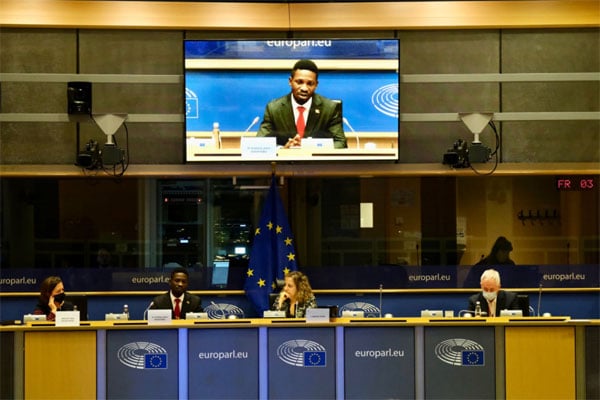
Bobi Wine address to European Parliament over Uganda election dispute
Uganda’s contested 2026 general election has entered a new diplomatic phase as opposition leader Robert Kyagulanyi Ssentamu, widely known as Bobi Wine, prepares to address the European Parliament on February 23. The session, expected to take place in Brussels, signals a shift in Uganda’s political contestation from domestic protest to international advocacy, placing Kampala’s post-election trajectory under heightened European scrutiny.
The backdrop to the engagement is the January 15 presidential election in which Yoweri Museveni was declared winner with more than 71 per cent of the vote, extending his nearly four-decade rule. Mr Kyagulanyi, running on the National Unity Platform (NUP) ticket, officially garnered about 24.7 per cent but rejected the outcome, alleging widespread fraud, intimidation of agents, and voter suppression in opposition strongholds.
In the immediate aftermath of polling day, protests broke out in parts of Kampala and other urban centres, with demonstrators accusing authorities of manipulating the electoral process. Security agencies responded with force, deploying police and military units to disperse crowds. Rights groups reported fatalities, mass arrests and temporary internet shutdowns that disrupted communication and limited independent verification of events during the most volatile period.
Mr Kyagulanyi himself became a focal point of the standoff. His residence was placed under heavy security deployment in mid-January, and his party alleged he was effectively under siege. The government denied accusations of unlawful confinement, maintaining that security measures were preventive. Around the same period, statements attributed to Gen Muhoozi Kainerugaba, Uganda’s Chief of Defence Forces, warned against actions deemed to threaten national stability, intensifying tensions between the opposition and the state.
Last week, Mr Kyagulanyi addressed the Geneva Summit for Human Rights and Democracy via video link from an undisclosed location. In his remarks, he detailed alleged abuses during and after the election, including what he described as intimidation of his family and supporters. He urged foreign governments to consider targeted sanctions against senior Ugandan officials, arguing that international pressure was necessary to safeguard democratic norms.
Uganda Minister Okello Oryem Says Bobi Wine Could Face Treason Charges, Signals Rift with EU.
The European Parliament’s own position hardened on February 12 when it adopted a resolution criticizing the conduct of Uganda’s elections. Lawmakers cited reports of intimidation, violence, arrests of opposition figures and a nationwide internet blackout. The resolution called for investigations into alleged human rights violations and urged the European Union to reassess aspects of its cooperation with Kampala to ensure alignment with democratic principles.
Monday’s session is expected to feature Mr Kyagulanyi alongside Uganda’s Ambassador to the EU, H.E. Mirjam Blaak, and representatives of civil society. The hearing will likely explore questions around political freedoms, the independence of electoral institutions, and the treatment of detained activists. For European lawmakers, the engagement provides an opportunity to weigh competing narratives presented by the government and the opposition.
Analysts say the stakes extend beyond rhetoric. The European Union remains a significant development partner for Uganda, supporting programmes in governance, health, infrastructure and refugee assistance. Should Brussels opt to recalibrate aid, review trade preferences under frameworks such as the Everything But Arms initiative, or impose targeted sanctions, the diplomatic and economic implications for Kampala could be substantial.
However, domestic political calculations may blunt the immediate impact of external pressure. The Museveni administration has historically framed criticism from Western capitals as interference in sovereign affairs. Officials argue that Uganda’s institutions, including courts and the Electoral Commission, provide avenues for redress. This narrative often resonates with constituencies sensitive to perceptions of neocolonial overreach.
At the same time, urban voters and younger Ugandans a demographic that forms the backbone of NUP’s support have increasingly embraced international advocacy as a lever for reform. For them, Mr Kyagulanyi’s appearance in Brussels represents an effort to internationalize concerns about governance, electoral integrity and civil liberties.
Whether the European Parliament’s engagement translates into concrete policy shifts remains uncertain. EU decisions typically require coordination among member states and the European Commission, and diplomatic recalibrations can be gradual. Nonetheless, the optics of a Ugandan opposition leader addressing European lawmakers underscore the global dimension the country’s electoral dispute has assumed.
As Uganda navigates the aftermath of its most recent polls, the Brussels session may mark a pivotal moment in the evolving contest between state authority and opposition mobilization. Yet, while international forums can amplify voices and shape narratives, the ultimate resolution of Uganda’s political impasse will likely depend on domestic institutions, public sentiment and the balance of power within the country itself.
ALSO READ: Kyagulanyi petition piles pressure as EU Parliament summons Uganda envoy Mirjam Blaak.
