

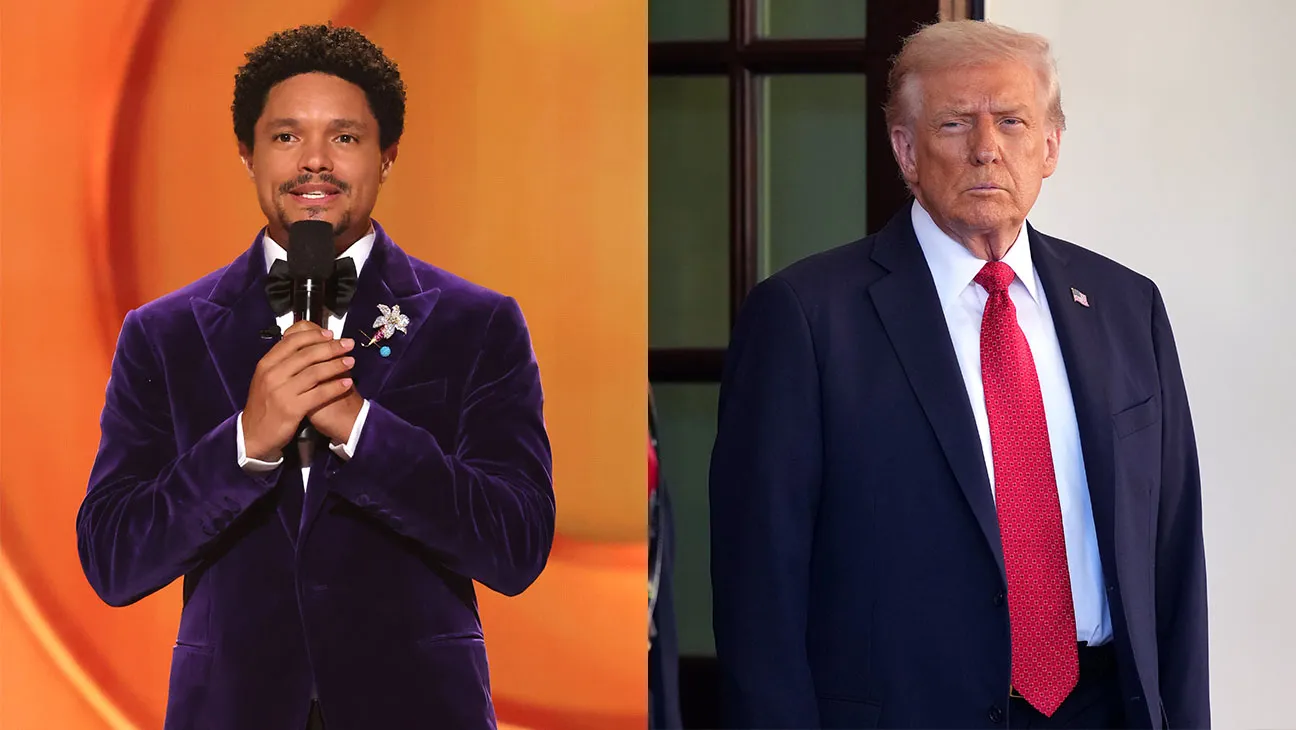
U.S. President Donald Trump has launched a sharply worded attack on comedian and award‑show host Trevor Noah, after Noah made a controversial joke about the president’s alleged connection to Jeffrey Epstein during the 68th Annual Grammy Awards, comments that have now sparked threats of legal action, and renewed debate about satire and public discourse.
The incident began Sunday night when Noah, hosting the Grammy Awards for the sixth and final time, quipped that the Song of the Year trophy was coveted “almost as much as Trump wants Greenland,” and then joked that “since Epstein’s island is gone, he needs a new one to hang out with Bill Clinton,” a punchline that drew laughter inside the arena, but outrage from Trump online.
Trump responded early Monday on his social media platform Truth Social, calling the joke “false and defamatory,” denying he had ever visited Epstein’s private island, and insisting Noah should “get his facts straight, and get them straight fast,” while also attacking the Grammys as “virtually unwatchable,” and Noah as a “poor, pathetic, talentless, dope of an M.C.”
In the lengthy post, the president threatened to unleash his lawyers to sue Noah “for plenty,” and compared the comedian unfavorably to other late‑night hosts, saying he has a history of countering his critics in court.
Noah’s management team had not immediately responded to requests for comment by Monday afternoon, but legal experts say jokes made in live broadcasts are generally protected under U.S. free‑speech law as political satire, making successful defamation claims against entertainers difficult to win in court.
The exchange has ignited a broader conversation about humour, political criticism, and the boundaries between satire and defamation, with media observers noting that high‑profile comedians often face pushback from political figures who feel targeted, especially in an era of polarized public discourse.
