

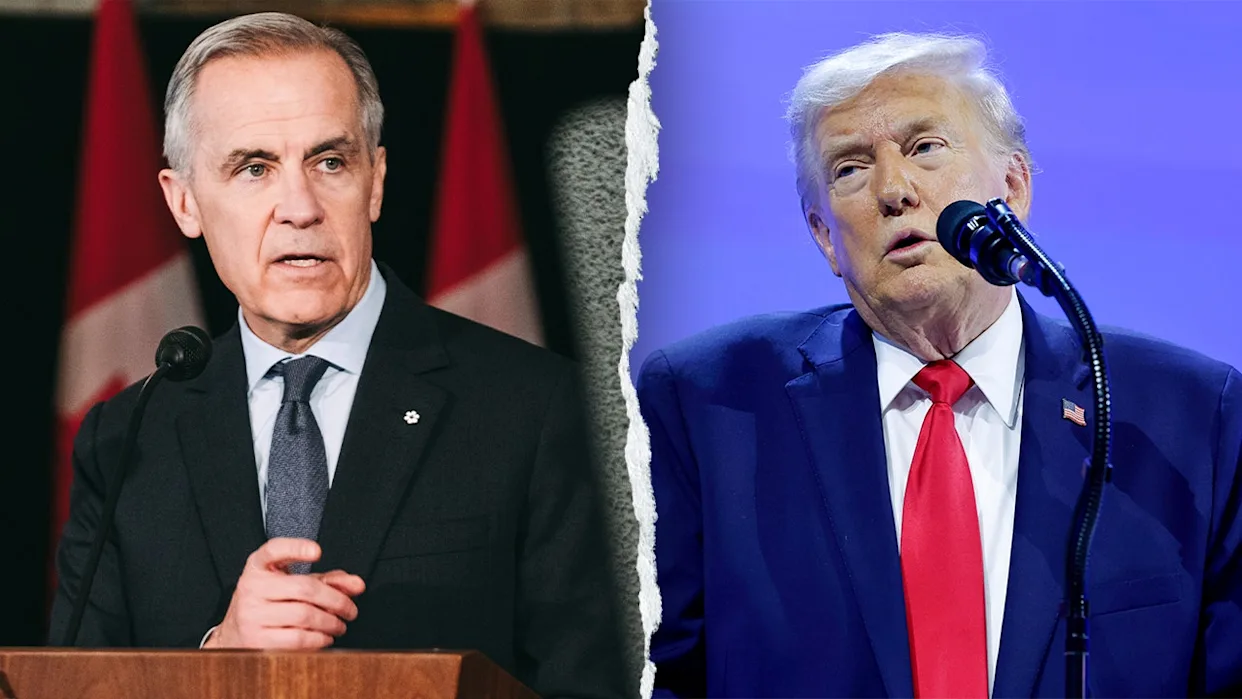
Washington / Ottawa — Former United States President Donald Trump has threatened to impose a 100 per cent tariff on Canadian goods should he return to office, citing concerns over what he described as Canada’s “deepening trade cooperation with China.”
In a statement released on his social media platform, Trump accused Canada of benefiting from access to the US market while simultaneously strengthening economic ties with Beijing, which Washington has long viewed as a strategic and economic rival.
“Canada cannot have it both ways,” Trump said, adding that his administration would take “strong and immediate action” to protect American industries and workers from what he termed unfair trade practices linked to China.
Canadian officials responded cautiously, with Prime Minister Justin Trudeau’s office stating that Canada’s trade policies are guided by international rules and national interest. The statement emphasized that Canada remains a close ally of the United States and a key trading partner under the United States–Mexico–Canada Agreement (USMCA).
Trade analysts warned that such a move, if implemented, could disrupt supply chains across North America, particularly in the automotive, agriculture and manufacturing sectors, where cross-border trade is deeply integrated.
A Record of Tariff Pressure
Trump’s threat against Canada is consistent with his record during his 2017–2021 presidency, when tariffs became a central tool of US foreign and economic policy.
China was the primary target, with Washington imposing sweeping tariffs on hundreds of billions of dollars’ worth of Chinese goods, triggering a prolonged trade war that affected global markets. Beijing retaliated with its own tariffs on US agricultural and industrial products.
Canada and Mexico were also hit during Trump’s first term, when the US imposed tariffs on steel and aluminium imports, citing national security concerns. The move strained relations with close allies and prompted retaliatory measures before exemptions were later negotiated.
The European Union similarly faced tariffs on steel and aluminium, while countries such as Germany and France were threatened with additional levies on automobiles. Japan and South Korea were also pressured to renegotiate trade terms under the threat of tariffs.
Emerging economies were not spared. India lost preferential access to the US market under the Generalized System of Preferences, while tariffs were imposed on goods from Turkey, Brazil and Argentina at various points, particularly in the metals sector.
Economists caution that renewed tariff threats could heighten global trade uncertainty at a time when many economies are struggling with inflation, slowing growth and geopolitical tensions.
“If implemented, a 100 per cent tariff would be unprecedented between two allied economies like the US and Canada,” said one international trade expert. “It would likely provoke retaliation and undermine investor confidence.”
As the US election cycle intensifies, Trump has signalled that trade protectionism would once again be central to his economic agenda, raising questions about the future of global trade relations should he return to the White House.
For now, Canadian officials say they will continue diplomatic engagement, while businesses on both sides of the border watch developments closely.
ALSO READ: Shock and Grief as another US Citizen Is Murdered in Minneapolis

1 Comment
Pingback: USS Abraham Lincoln on High Alert as US-Iran Tensions Spike; Possible Attack Looms - Mukono News