

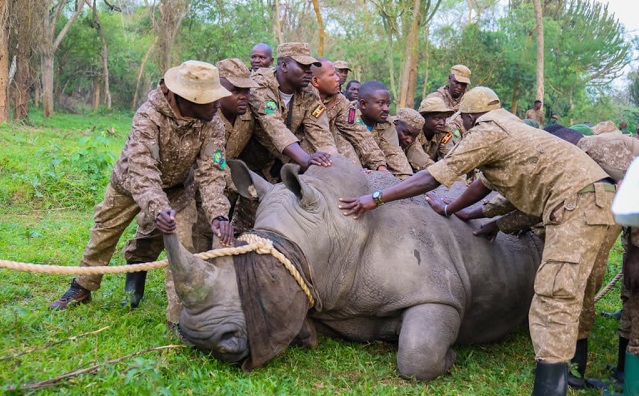
Uganda has reintroduced rhinos to Kidepo Valley National Park for the first time in more than 40 years, marking a significant milestone in the country’s efforts to restore its wildlife. The relocation, carried out by the Uganda Wildlife Authority (UWA), comes after decades of absence caused by poaching and insecurity during the 1980s, which wiped out the species from the park.
The rhinos were transported from Ziwa Rhino Sanctuary, where a breeding programme has steadily increased the population, under strict veterinary supervision. UWA officials said the animals were carefully monitored during transit to ensure their health and successful adaptation to their new environment.
Conservationists said the reintroduction is expected to restore ecological balance in Kidepo, which is regarded as one of Uganda’s most pristine national parks. The move is also anticipated to enhance Uganda’s tourism sector, with the rhinos contributing to the “Big Five” wildlife attractions that draw visitors from across the globe.
Local communities around Kidepo were engaged throughout the process to encourage support for the programme and reduce potential human-wildlife conflicts. Officials emphasized the importance of community involvement, noting that the success of the relocation depends on ensuring that local populations benefit from conservation activities.
Authorities also said that the initiative aligns with broader national and international commitments to wildlife protection. Uganda has previously succeeded in increasing rhino populations at Ziwa Rhino Sanctuary, and this relocation represents confidence in the country’s ability to sustain rhinos in a natural, open environment.
While the programme marks a major achievement, experts caution that long-term protection will require continued investment in security and monitoring. Anti-poaching patrols, community education, and collaboration with international conservation partners are essential to safeguard the species against potential threats.
The relocation also provides a valuable opportunity for research and data collection, allowing wildlife authorities to study the behaviour and adaptation of rhinos in a natural park setting. Insights gained from Kidepo could inform future conservation strategies and similar reintroduction efforts in other protected areas across Africa.
Uganda’s Wildlife Authority said the programme demonstrates the government’s commitment to preserving biodiversity and promoting sustainable tourism. Officials expressed optimism that Kidepo will once again support a thriving rhino population and serve as a model for other conservation projects in the region.
The successful reintroduction has drawn praise from both local and international conservationists, who described it as a critical step in restoring one of Africa’s iconic species. As the rhinos settle into their new habitat, authorities said monitoring will continue closely to ensure the population grows and contributes to long-term ecological and economic benefits for Uganda.
ALSO READ: Namuganga Hill: The giant rock that greets you from afar
