

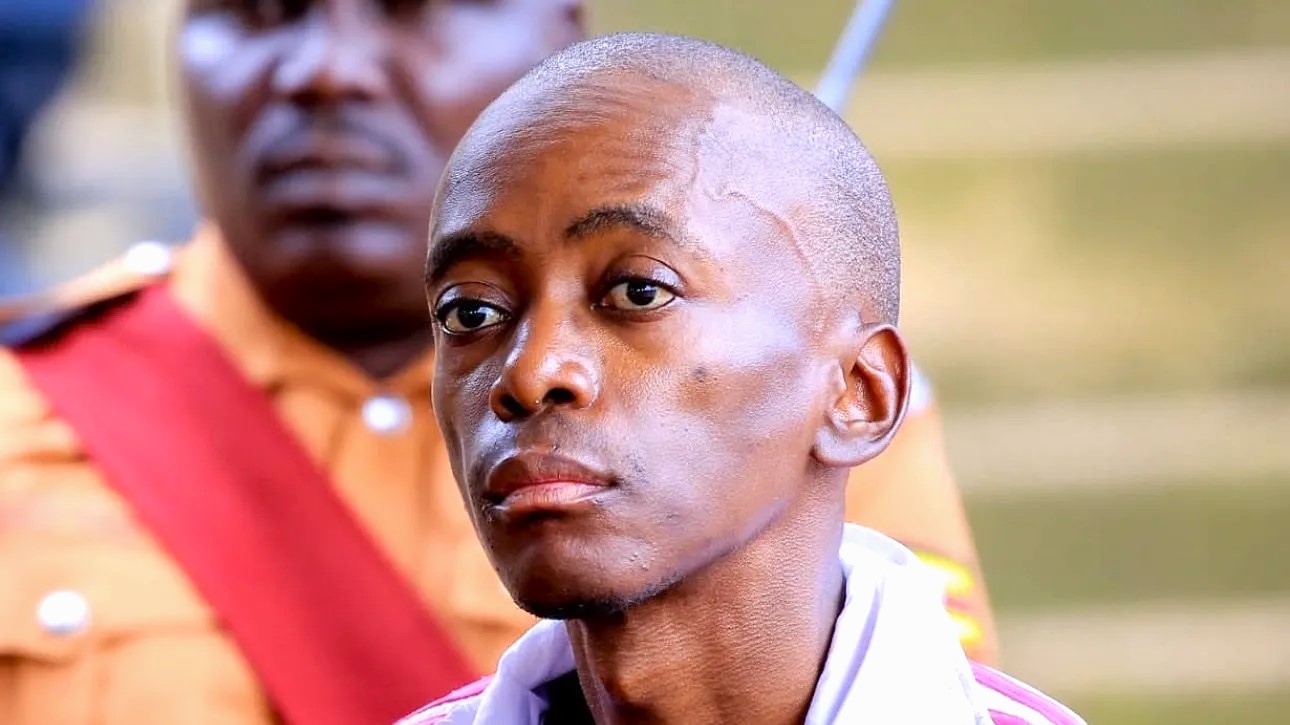
Okello death sentence Uganda
The conviction and death sentence handed to Okello Christopher Onyum in a high-profile murder case in Kampala has reignited national debate on Uganda’s death penalty system, its enforcement, and the long-standing gap between sentencing and actual execution.
While the High Court has pronounced the ultimate punishment, legal history and Uganda’s current judicial practice suggest that a death sentence does not automatically lead to execution. In many cases, it triggers a long legal process that may end in appeal, sentence reduction, or commutation to life imprisonment.
Okello’s case, which has attracted wide public attention due to the gravity of the allegations and the unusual “mobile court” arrangement used during the trial, now enters a critical legal phase beyond the initial conviction.
Court proceedings indicated that prosecution relied heavily on witness testimony and circumstantial evidence placing the accused near the scene of the crime. Okello consistently denied the charges throughout the trial. His defence also raised claims of mental instability, but the court dismissed the argument, citing insufficient medical proof.
Despite the conviction, legal experts say the sentence is not final. Uganda’s justice system provides multiple layers of review for capital offences, and these often determine whether a death sentence is ultimately carried out.
The first stage is the automatic right of appeal to the Court of Appeal and potentially the Supreme Court. At this stage, the defence may challenge the credibility of evidence, procedural fairness, and legal interpretation. In many capital cases, appellate courts either reduce sentences or order retrials depending on identified irregularities.
Even if appeals fail, the Constitution allows convicts to petition the President for mercy. This power of clemency has historically played a major role in Uganda’s death penalty outcomes, with many sentences being commuted to life imprisonment rather than executed.
Uganda’s modern history shows a significant gap between death sentences issued by courts and actual executions. While capital punishment remains in law, its enforcement has drastically reduced over the past three decades.
The last widely recognized executions in Uganda took place in April 1999 at Luzira Maximum Security Prison, where multiple inmates were hanged following murder convictions. Among them was Hajj Musa Sebirumbi, who had been convicted in connection with killings linked to the Luweero Triangle conflict period. Reports indicate he was executed alongside more than 20 other inmates after their appeals were dismissed.
Since that period, Uganda has not carried out any widely confirmed executions, despite courts continuing to issue death sentences in serious criminal cases. This has led to Uganda being described by legal observers as a country that retains the death penalty in law but applies it rarely in practice.
The 2005 Constitutional Court ruling also significantly altered the landscape by declaring the mandatory death sentence unconstitutional. The ruling required judges to consider individual circumstances before imposing capital punishment, further reducing automatic application of death sentences.
Legal analysts argue that several factors contribute to the declining use of executions. These include constitutional safeguards, prolonged appeal processes, presidential clemency powers, and increasing human rights scrutiny both locally and internationally. As a result, many death row inmates remain in prison for years without execution, and a significant number eventually have their sentences commuted.
In the context of Okello’s case, this legal framework means that while the High Court has imposed the death penalty, the sentence is far from the final stage. The case is expected to proceed to higher appellate courts, where legal arguments may significantly alter the outcome.
Depending on the strength of the appeal, several outcomes remain possible. The conviction could be upheld, the sentence reduced to life imprisonment, or in rare instances, a retrial could be ordered if procedural concerns are established.
Even after exhausting court processes, the President retains constitutional authority to grant clemency. Historically, this has been one of the most decisive factors in capital punishment cases in Uganda, with many prisoners ultimately spared execution.
The case has also reignited public debate about Uganda’s continued retention of the death penalty. While some sections of the public view it as a necessary deterrent for serious crimes, others argue that the lengthy appeals process and lack of executions render it largely symbolic.
Legal professionals have also raised concerns about the use of mobile courts in high-profile criminal trials, arguing that while they may enhance public access to justice, they must not compromise fair trial standards, especially in cases involving capital punishment.
For now, Okello Christopher Onyum remains under a death sentence, but his legal journey is far from over. As Uganda’s judicial history shows, a death sentence often marks the beginning of a prolonged legal process rather than an immediate path to execution.
With appeals likely ahead and clemency still possible, the final outcome of the case remains uncertain, reinforcing the reality that in Uganda’s current justice system, a death sentence does not necessarily mean execution.
ALSO READ: Police Name Suspect in Ggaba Daycare Attack That Left Four Children Dead
