

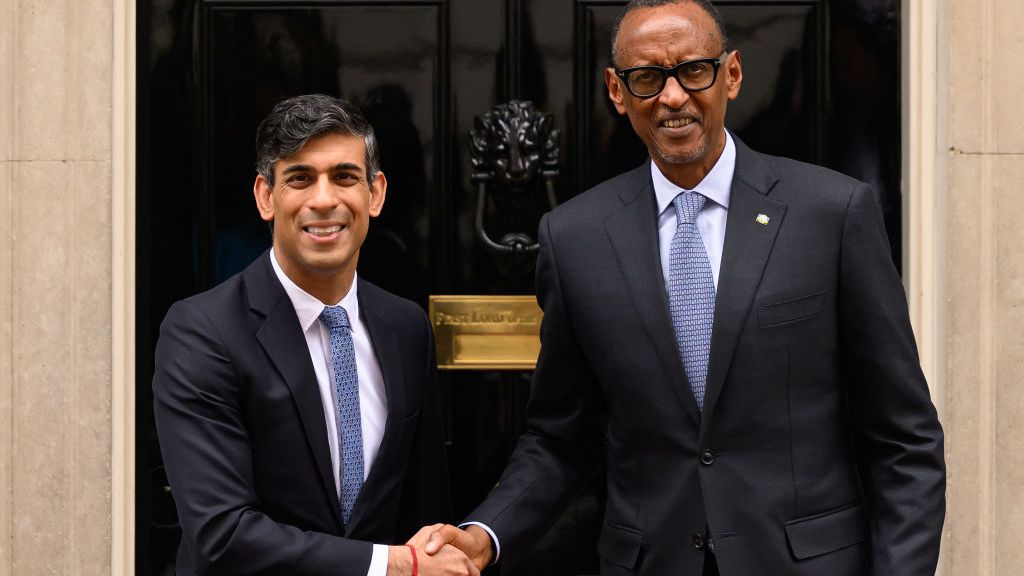
The government of Rwanda has taken the United Kingdom to international arbitration, seeking over £100 million it says is owed after London abandoned a controversial migrant resettlement agreement. Kigali has lodged the case at the Permanent Court of Arbitration in The Hague, claiming Britain breached the terms of a bilateral deal meant to relocate asylum seekers arriving in the UK via irregular routes to Rwanda.
Rwanda says it incurred substantial costs preparing for the program, including building reception facilities, hiring staff, and setting up legal and administrative systems for processing asylum seekers. According to the Rwandan delegation, led by Justice Minister Emmanuel Ugirashebuja, the UK owes two outstanding payments of £50 million each, alongside additional sums for unmet obligations under the 2022 Migration and Economic Development Partnership (MEDP).
The agreement, initially signed under the Conservative government led by then-Prime Minister Rishi Sunak, aimed to send some asylum seekers arriving in the UK to Rwanda for relocation and processing. The plan faced legal challenges in British courts, with critics arguing Rwanda was not a safe destination for vulnerable migrants. The UK Supreme Court effectively blocked deportations, ruling that the scheme could not proceed as planned.
When Labour’s Sir Keir Starmer became prime minister in July 2024, the plan was scrapped immediately. Government officials noted that only a handful of migrants reportedly four had voluntarily gone to Rwanda under the agreement. The Labour administration described the scheme as “dead and buried,” signaling a major policy shift from the previous government.
Despite the cancellation, Rwanda insists that London is still contractually obligated to make the agreed payments. The country is also seeking compensation for Britain’s alleged failure to uphold reciprocal arrangements for resettling vulnerable refugees. Rwanda’s lawyers argue that terminating the plan unilaterally does not relieve the UK of financial commitments already due.
British representatives, however, maintain that the agreement became void after the change in government. Lawyers argued that abandoning the scheme was a logical step following the Labour government’s policy reversal. They also noted that Kigali’s arbitration filing comes amid criticism over UK aid suspensions to Rwanda linked to regional conflict concerns.
The Hague tribunal is expected to deliberate for several months before issuing a ruling. Observers note that a decision in favor of Rwanda could require the British government to pay tens of millions of pounds, creating potential political controversy given widespread opposition to the original plan.
Analysts argue that the dispute highlights the challenges of implementing international migration agreements and the risks of policy reversals when new governments take office. The case underscores broader debates across Europe about asylum management, border security, and international responsibility-sharing for refugees.
As the arbitration continues, Rwanda and the UK remain engaged in a legal contest that could have far-reaching financial and diplomatic implications, not only for bilateral relations but also for future migration cooperation agreements.
ALSO READ: Kagame dismisses US sanctions on Rwanda military as “one-sided”.
